Akshemseddin and the Discovery of the Tomb: Story of a Spiritual Pioneer
25 January 2026 - Eyüp Sultan Camii
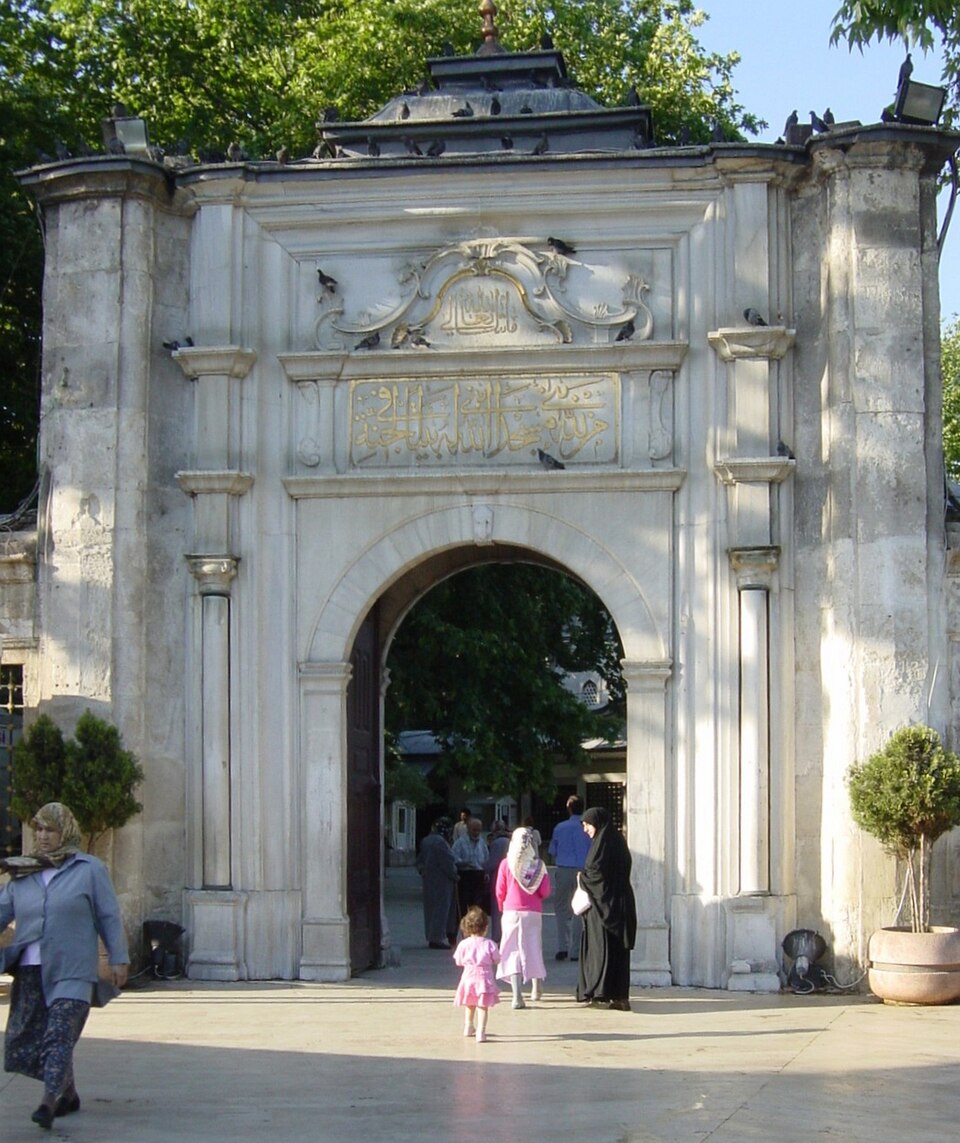
Akshemseddin (1389-1459) is one of the most important scholars and Sufis of Ottoman history. He was alongside Fatih Sultan Mehmed during the conquest of Istanbul, provided him spiritual support, and most importantly, discovered the location of the grave of Abu Ayyub al-Ansari. This discovery marked the beginning of the construction of Eyüp Sultan Mosque and Tomb.
\n\nWho Was Akshemseddin?
\n\nAkshemseddin's real name was Shemseddin Muhammad bin Hamza. He was born in Damascus in 1389. He migrated to Anatolia with his family at a young age and received his education in cities such as Osmancik, Goynuk, and Beypazari.
\n\nHe possessed deep knowledge in medicine, astronomy, mathematics, and Islamic sciences. His advancement of ideas close to germ theory in particular made him a scientist far ahead of his time. In his work 'Maddetul Hayat,' he wrote that diseases were transmitted by small living organisms invisible to the naked eye.
\n\nOn the path of Sufism, he became a disciple of Haci Bayram-i Veli and became one of his foremost successors. He is regarded as the second master of the Bayramiyya order.
\n\nHis Relationship with Fatih
\n\nAkshemseddin was closely involved in the education of young Prince Mehmed. Besides teaching him Islamic sciences, he instilled in him the spiritual significance of the conquest of Istanbul.
\n\nAkshemseddin repeatedly reminded young Mehmed of the Prophet's (pbuh) hadith: 'Constantinople will surely be conquered. How excellent a commander is the one who conquers it, and how excellent an army is his army,' thereby strengthening his determination for the conquest.
\n\nDuring the siege, Akshemseddin made great efforts to keep the army's morale high. When some commanders suggested retreating as the siege prolonged, Akshemseddin encouraged Fatih by saying 'The city will surely be conquered.'
\n\nThe Discovery of the Grave
\n\nAkshemseddin's greatest service after the conquest of Istanbul was locating the grave of Abu Ayyub al-Ansari. Abu Ayyub had been martyred during the siege of Istanbul in 669 and was buried near the city walls. However, the location of his grave had been forgotten over the centuries.
\n\nAkshemseddin determined the location of the grave through spiritual discovery and inspiration. According to tradition, after extended worship and meditation, Akshemseddin pointed to a spot outside the walls, near the shore of the Golden Horn.
\n\nWhen excavation was carried out, a grave and a stone inscribed with 'This is the grave of Abu Ayyub' were found at the indicated location. This discovery filled both Fatih Sultan Mehmed and the entire Islamic world with great joy and excitement.
\n\nConsequences of the Discovery
\n\nThe discovery of Abu Ayyub al-Ansari's grave was a turning point in the formation of Istanbul's Islamic identity. Fatih Sultan Mehmed immediately had a tomb built over the grave and a mosque constructed beside it.
\n\nThis discovery ensured that the conquest of Istanbul was perceived not merely as a military victory but as the fulfillment of a spiritual glad tiding. The presence of the Prophet's beloved companion's grave here strengthened Istanbul's claim to being the center of the Islamic world.
\n\nAkshemseddin's Final Years
\n\nAfter the conquest of Istanbul, Akshemseddin preferred a life far from worldly pleasures. Despite Fatih's efforts to keep him in Istanbul, he retired to Goynuk and spent the rest of his life in worship.
\n\nAkshemseddin passed away in Goynuk in 1459, and his tomb is open for visitors in the town of Goynuk. Every year, thousands of people visit the grave of this great scholar.
\n\n\n\n
Had Akshemseddin not existed, perhaps Istanbul would have been conquered, but the grave of Abu Ayyub al-Ansari might never have been found. This discovery formed the foundation of Eyüp Sultan's spiritual status today. Akshemseddin, as a scholar, a Sufi, and a history-maker, will forever preserve his place in Islamic and Ottoman history.