Laylat al-Baraat 2027: The Night of Forgiveness and Eyup Sultan
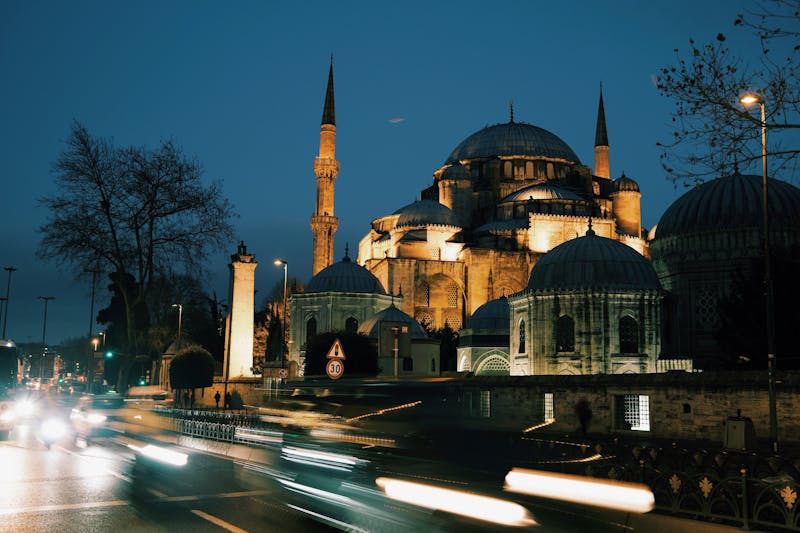
05 November 2026 - Eyüp Sultan Camii
When Is Laylat al-Baraat in 2027?
According to the religious calendar of the Turkish Presidency of Religious Affairs (Diyanet), Berat Kandili, Laylat al-Baraat, falls on Friday, 22 January 2027. The holy night begins with the sunset prayer on Friday evening and lasts until Saturday morning. It is the fifteenth night of the Hijri month of Sha'ban, which is why hadith sources call it "the night of mid-Sha'ban" (laylat al-nisf min Sha'ban).
About two weeks after Laylat al-Baraat, the month of Ramadan begins on Monday, 8 February 2027. This makes the night of Baraat the last great spiritual stop before entering Ramadan.
What Does "Baraat" Mean?
The Arabic word baraa'a means "to be freed, to be far from, to be cleared". The Turkish word "beraat", meaning acquittal from a charge, comes from the same root, and in the Ottoman Empire official documents granted by the sultan were also called "berat". The night bears this name because it is a night when the hope of being cleansed of sins and forgiven through Allah's mercy comes to the fore.
The Virtue of the Night of Baraat
The following hadith is narrated from the Prophet (peace be upon him) about the fifteenth night of Sha'ban: "Allah manifests Himself to His servants on the night of the middle of Sha'ban and forgives all of them except one who associates partners with Him and one who harbours hatred towards his brother." (Ibn Majah, Iqamat al-Salat 191). Some hadith scholars consider it to be of hasan (good) grade because it has been narrated through several chains.
The warning in this hadith is very important: one of the two obstacles to forgiveness is hatred and resentment in the heart. The night of Baraat is therefore not only a night of worship but also a night of reconciliation and seeking mutual forgiveness. Making peace with a relative, friend or neighbour you have fallen out with may be the most valuable deed of this night.
Most Quran commentators interpret the "blessed night" mentioned in verses 3-4 of Surah ad-Dukhan as Laylat al-Qadr, while some have interpreted it as the night of Baraat. You can read Surah ad-Dukhan with its Arabic text and translation on our site.
Fasting in Sha'ban
Aisha reported that, apart from Ramadan, the Prophet fasted most in the month of Sha'ban (Bukhari, Sawm 52; Muslim, Siyam 176). Voluntary fasting in Sha'ban is therefore a beautiful sunnah. The specific narration about fasting on the day after the night of Baraat is considered weak; nevertheless, there is no harm in fasting that day with the general intention of a Sha'ban fast. It is recommended not to fast a day or two before Ramadan merely as a precaution.
How to Spend the Night of Baraat
As with the other holy nights, no specific prayer with a set form has been reported in authentic sources for the night of Baraat. The night can be spent with the following acts of worship:
- Prayer: Praying maghrib and isha in congregation and spending the night with make-up and voluntary prayers.
- Repentance and seeking forgiveness: As this is a night of forgiveness, istighfar is made abundantly. The istighfar supplication and Sayyid al-Istighfar are among the most fitting prayers of this night.
- Reading the Quran: Reading Surah Yasin on this night is a widespread folk tradition. Although reading it a fixed number of times is not part of the Sunnah, reciting the Quran, especially Yasin, is a beautiful way to spend the night.
- Reconciling and seeking forgiveness from others: Asking forgiveness from those we have hurt and ending quarrels.
- Praying for the deceased: Reciting the Quran and praying for the souls of our parents and loved ones.
Laylat al-Baraat and Grave Visits at Eyup Sultan
Eyup is home to one of the oldest and largest cemeteries in Istanbul. For centuries many Istanbulites wished to be buried near Eyup Sultan, which is why thousands of people, from members of the dynasty to poets, scholars and ordinary people, rest in the cemeteries that stretch up the hills of the district. On holy days, especially on Laylat al-Baraat, families visit the graves of their loved ones during the day, recite al-Fatiha and Yasin, and in the evening join the prayer at Eyup Sultan Mosque.
When visiting graves, take care not to step on them, not to speak loudly and to keep the cemetery clean. For the historic graves of Eyup and the famous people buried here, see our article The Eyup Sultan Cemetery and Its Famous Burials.
In the evening the mosque and the square fill with an excitement that signals the approach of Ramadan. Praying isha at Eyup Sultan on the night of Baraat and visiting the tomb is a beautiful final step in preparing for Ramadan.
Visiting Eyup Sultan on a Holy Night
- Come early: On kandil nights Eyup Sultan Mosque is one of the most crowded mosques in Istanbul. Arriving before the sunset (maghrib) prayer makes it easier to find a place inside and to visit the tomb more calmly.
- Use public transport: Parking in the area is very difficult on these nights. The Eyüpsultan Teleferik stop of the T5 tram or the Golden Horn ferry are the easiest options. See our transport guide for details.
- Check the programme in advance: On kandil nights the imperial mosques of Istanbul usually hold Quran recitation, mawlid and prayer programmes. You can learn the programme at Eyup Sultan Mosque from announcements of the Istanbul Mufti's Office or from the mosque staff.
- Plan your tomb visit: Long queues can form in front of the tomb on holy nights. For visiting hours and etiquette read Tomb Visiting Hours and Rules.
- Check the prayer times: The holy night begins with the sunset prayer. See our prayer times page for maghrib and isha times.
- Clothing and belongings: Keep an eye on your valuables in the crowd. Women are expected to cover their hair inside the mosque, and both men and women should wear clothing that covers the shoulders and knees.