Detailed Examination of Eyup Sultan Mosque Architectural Features
19 February 2026 - Eyüp Sultan Camii
Historical Development
Eyüp Sultan Mosque was first built by Fatih Sultan Mehmet in 1458. However, the mosque, which was severely damaged in the 1766 earthquake, was completely rebuilt during the reign of Selim III between 1798-1800. The structure we see today bears the characteristics of late Ottoman period architecture and reflects a synthesis of Baroque and classical Ottoman styles.
Dome and Minarets
The main dome of the mosque is 17 meters in diameter and covers the central space. The half-domes and vaults supporting the main dome give the structure an elegant silhouette. It has two minarets that are notable for their balcony details. The bodies of the minarets are fluted and topped with lead-covered conical caps.
Interior and Decorations
The interior of the mosque is adorned with painted decorations, calligraphy, and tile panels. The mihrab and minbar are made of marble and display elegant craftsmanship. The inner surface of the dome features botanical motifs and calligraphic compositions. Colored glass in the window lunettes filters a mystical light into the interior. The preaching pulpit is also a fine example of wood carving art.
Courtyard and Fountain
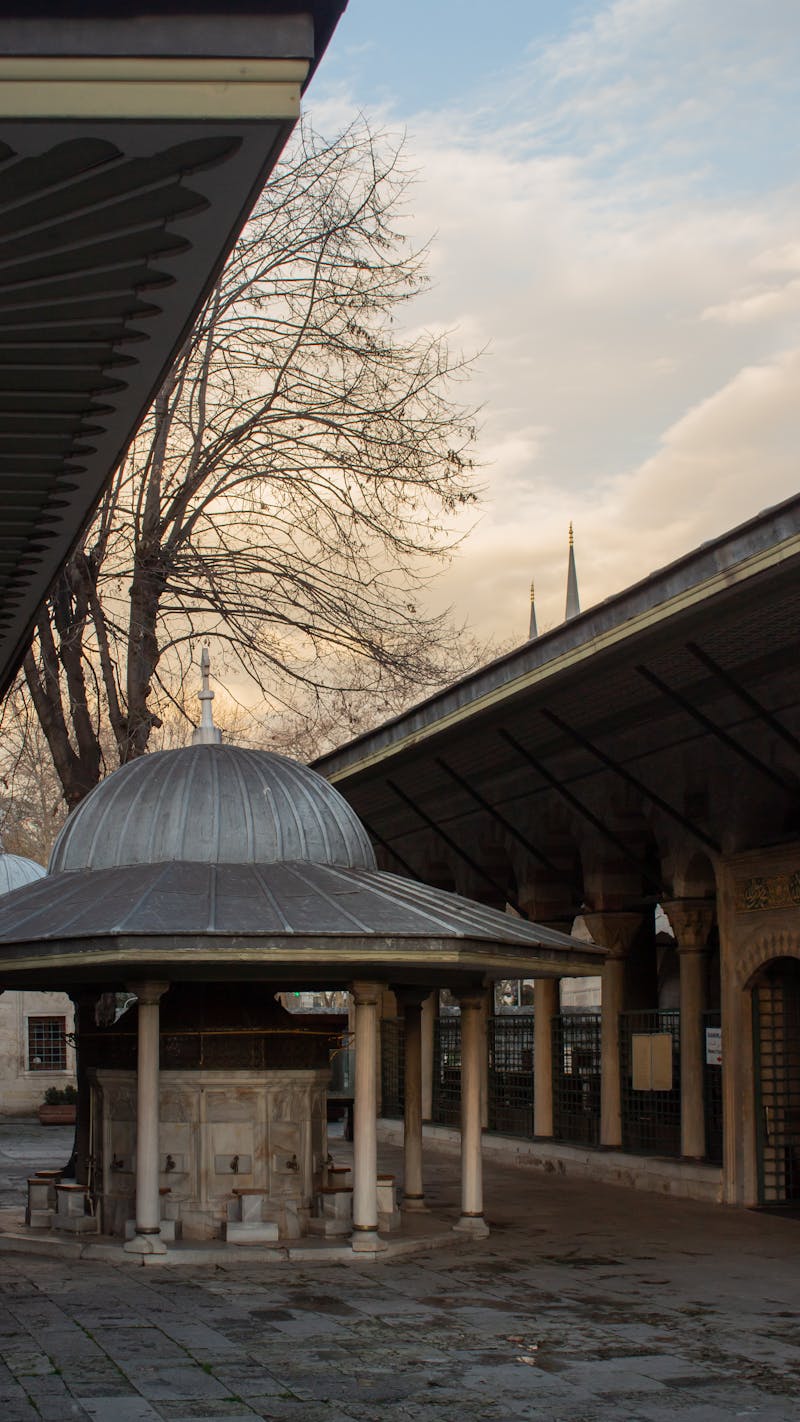
The inner courtyard of the mosque, surrounded by porticoes, creates a peaceful space. The fountain in the center of the courtyard has an octagonal plan and was designed for ablution. Marble paving is used on the courtyard floor. The portico columns and arches bear the typical features of Ottoman courtyard architecture. The courtyard also provides access to the tomb entrance.