The Story of Eyup Sultan's Plane Tree
17 February 2026 - Eyüp Sultan Camii
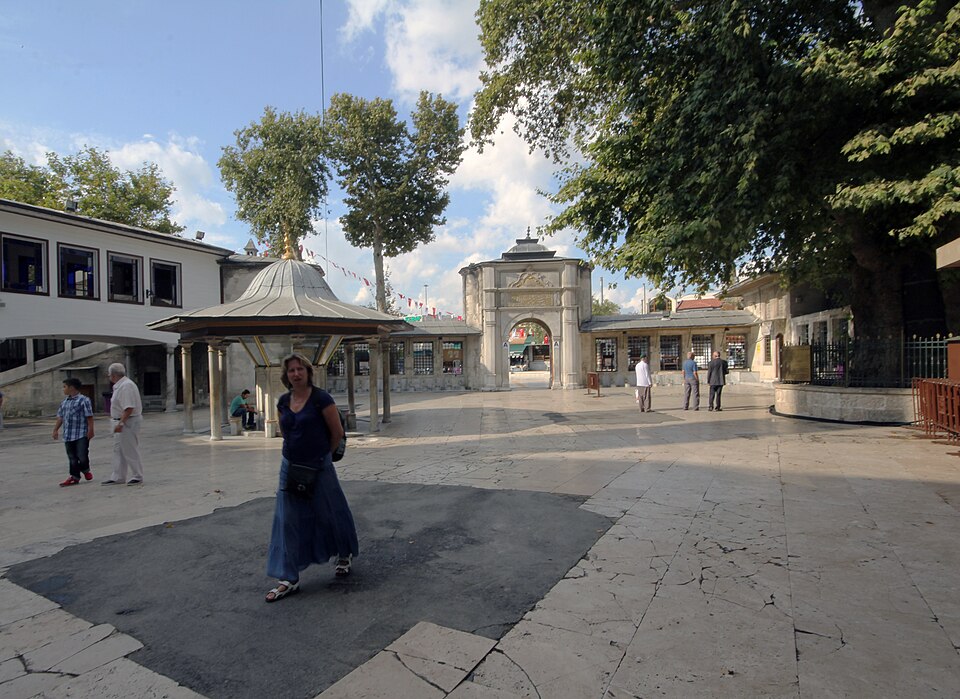
When you step into the courtyard of Eyüp Sultan Mosque, one of the first things to greet you is the massive plane tree reaching toward the sky. This is no ordinary plane tree. It is a living legend that carries the story of centuries in its roots, the prayers of generations in its branches, and the soul of Istanbul in its leaves.
\n\nThe Origin of the Plane Tree: An Epic Beginning with the Conquest
\n\nAccording to tradition, the plane tree in Eyüp Sultan's courtyard was planted in 1458 during the mosque's first construction. When Fatih Sultan Mehmed had a mosque built over the tomb of Abu Ayyub al-Ansari, discovered by his teacher Akshemseddin, a plane tree sapling was also planted in the courtyard.
\n\nIn Ottoman tradition, planting trees in mosque courtyards was done both to provide shade and coolness and to create a spiritual symbol. The plane tree held a special place in Ottoman culture: it symbolized longevity, resilience, and justice. Even sultans held council meetings under plane trees.
\n\nThe plane tree of Eyüp Sultan was different from others. It had taken root in sacred soil, right beside the tomb of a companion. For this reason, in the public eye it was not seen as an ordinary tree but as a blessed being that drew its share from spiritual grace.
\n\nThe Tree Whose Roots Reach the Tomb
\n\nThe most striking tradition about the Eyüp Sultan plane tree is that its roots extend to the tomb of Abu Ayyub al-Ansari. This belief has lived among the people for centuries and has deepened the respect shown to the tree.
\n\nDuring some repair works in the Ottoman period, the tree's roots were found to be indeed strongly advancing toward the tomb direction. This was interpreted as a spiritual connection, and the belief that the plane tree draws nourishment from the blessing of the tomb was strengthened.
\n\nEvliya Celebi, when mentioning this plane tree in his Seyahatname, writes: 'This tree is such a plane that whoever sits in its shade finds peace, whoever touches its branches feels relief. It is as though the spirituality of Abu Ayyub manifests in every leaf of this tree.'
\n\nLeaves That Never Wither
\n\nOne of the most told features of the Eyüp Sultan plane tree is that unlike other trees, it sheds its leaves very late even in autumn. The belief that the tree 'never withers' is widespread among the people.
\n\nFrom a botanical perspective, the humid microclimate of the Golden Horn shore and the plane tree's natural tendency to remain green for a long time can partly explain this. However, visitors' observations paint a different picture: while surrounding trees shed their leaves, the Eyüp Sultan plane tree is frequently noted as being the last tree to shed its leaves.
\n\nThere are traditions that even in the middle of winter, the tree's trunk remains warm. Some elderly visitors tell of feeling a warm temperature when touching the trunk of the plane tree on cold winter days. This is cited as evidence of the tree's spiritual properties.
\n\nThe Tree Under Whose Shade Sultans Sat
\n\nOttoman sultans made it a custom to sit under this plane tree when visiting Eyüp Sultan. Especially after sword-girding ceremonies, the new sultan would sit in the shade of the courtyard's plane tree for a while and contemplate.
\n\nSuleiman the Magnificent is known to have sat under this plane tree and prayed before great campaigns. According to tradition, Suleiman once stopped a servant who wanted to break a branch of the plane tree, saying: 'Every branch of this tree remembers the prayer of a sultan. Do not touch it.'
\n\nDuring the reign of Sultan Ahmed III (Tulip Period), a special seating area was built around the plane tree and it was called the 'Contemplation Corner.' Statesmen and scholars would gather here for scholarly conversations.
\n\nEarthquakes, Fires, and the Tree's Resistance
\n\nEyüp Sultan Mosque has experienced many earthquakes and fires throughout its history. In the great earthquake of 1766, the mosque was completely destroyed and rebuilt by Sultan Mustafa III. However, through all these destructions, the plane tree managed to remain standing.
\n\nIn the fire of 1821, a part of the Eyup district burned, but the courtyard plane tree was unharmed. This event was interpreted among the people as 'even fire respects this blessed tree.'
\n\nThe tree also suffered no damage in the 1894 and 1999 earthquakes. Standing tall for centuries despite storms, floods, and natural disasters, this plane tree has become a symbol that Eyüp Sultan is under spiritual protection.
\n\nThe Wish Tree Tradition
\n\nOver the centuries, the Eyüp Sultan plane tree has also become associated with a wish tree tradition. Visitors, after visiting the tomb, would come to the plane tree, pray silently, and make their wishes.
\n\nDuring the Ottoman period, some visitors are known to have tied small cloth pieces to the tree's branches. This tradition was an Islamic interpretation of the Central Asian Turkish wish tree tradition. However, over time, scholars noted that this practice had no Islamic basis and recommended only praying.
\n\nAlthough the cloth-tying tradition has been discontinued today, the custom of visitors praying by the plane tree continues. It is frequently seen that especially students during exam periods, families during times of illness, and troubled people pray in the shade of the plane tree.
\n\nA Sanctuary for Birds
\n\nThe Eyüp Sultan plane tree also holds a special place for Istanbul's bird population. The pigeons, sparrows, and turtle doves that nest in the tree are the natural residents of the courtyard.
\n\nAn interesting observation is the gathering of these birds on the tree's branches during the call to prayer. The fact that birds remain quietly on the branches rather than flying away during each prayer time is a situation that catches visitors' attention. This behavior is interpreted as 'even the birds show respect for the adhan.'
\n\nIt is also a widespread belief among the people that birds nesting in the plane tree's branches are more successful in breeding than those in other trees. The preference of birds in the area for this tree is evaluated as the tree's blessing reflecting on living creatures.
\n\nLiterature in the Shade of the Plane Tree
\n\nThe Eyüp Sultan plane tree also holds an important place in Ottoman literature. Many poets and writers have penned lines inspired by this tree.
\n\nDivan poet Baki, in a ghazal describing the Eyüp Sultan courtyard, addresses the plane tree: 'In your shade I found peace, o plane tree / Every leaf of yours is a remembrance, every branch a prayer.'
\n\nYahya Kemal Beyatli, in his Istanbul poems, described the Eyüp Sultan plane tree as 'a hermit standing beyond time.' Tanpinar, in his work Five Cities, expressed that the hours he spent in the shade of the plane tree while describing Eyüp Sultan transported him to the depths of history.
\n\nThe plane tree motif is frequently used in contemporary literature as well. Novel and story writers position this tree as a bridge between past and future in their works about Eyüp Sultan.
\n\nUnder the Plane Tree Today
\n\nToday, the Eyüp Sultan plane tree has been registered as a monumental tree by the Istanbul Metropolitan Municipality and placed under protection. The tree receives regular maintenance and is inspected by expert arborists.
\n\nEvery day, hundreds of visitors sit in the shade of the plane tree after visiting the tomb. Some pray, some take photographs, and some simply sit and enjoy the peace. Children who touch the tree's huge trunk listen to the stories told by the elderly.
\n\nThe Eyüp Sultan plane tree, with its over five-hundred-year lifespan, continues to be one of Istanbul's oldest and most meaningful trees. It is not just a tree; it is a witness to the conquest, a confidant of sultans, a consolation for the troubled, and Istanbul's green memory.
\n\n\n\n
When you visit Eyüp Sultan, sit for a while in the shade of the plane tree after leaving the tomb. Close your eyes and listen to the sound the wind makes in the leaves. That sound is the whisper of a five-century-old story. This ancient plane tree, every leaf of which carries a prayer and every branch a memory, is ready to witness your story too.