What Does the Eyup Sultan Inscription Tell?
01 March 2026 - Eyüp Sultan Camii
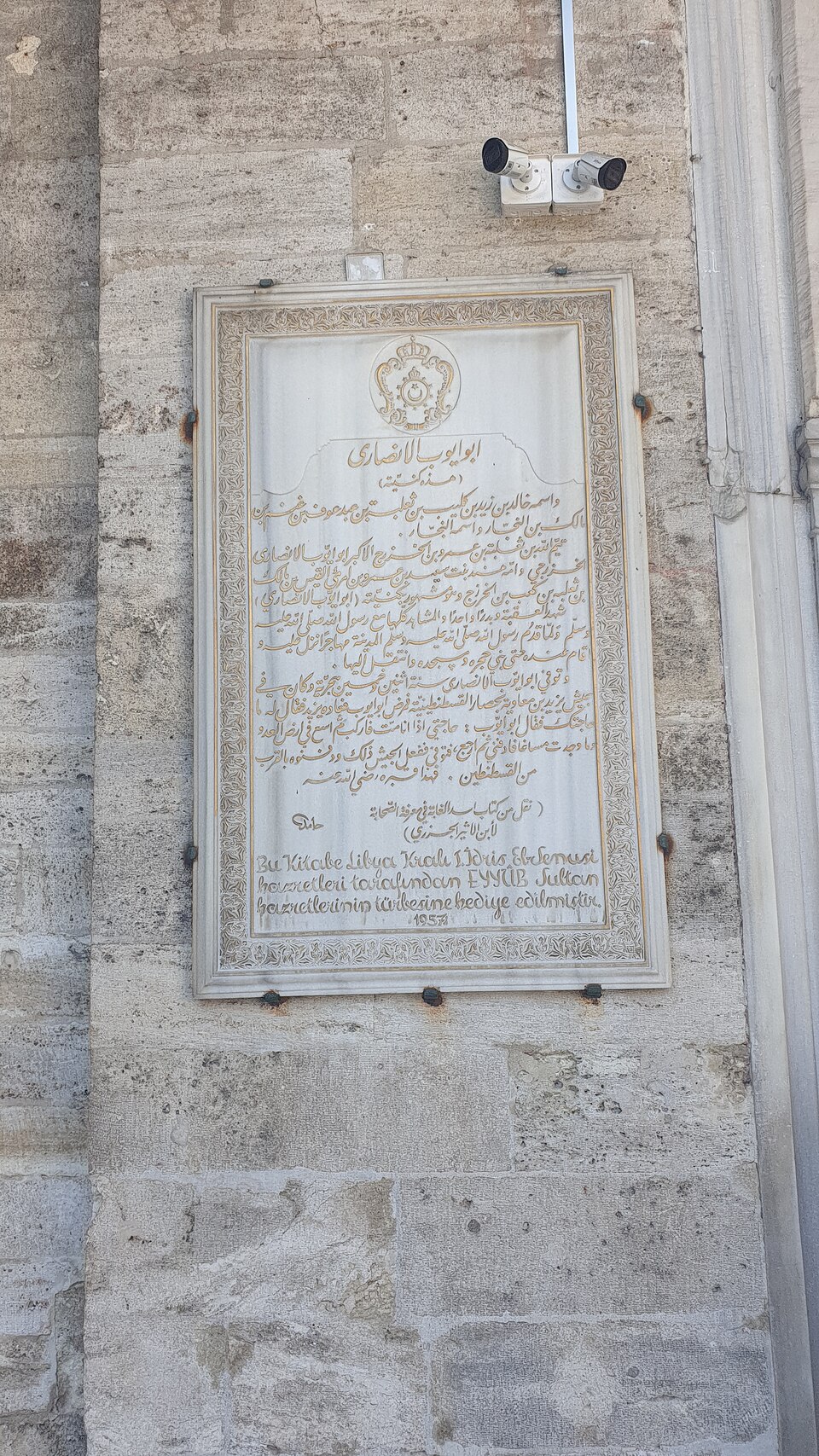
Eyüp Sultan Mosque, as one of the holiest places in Istanbul, holds great historical and spiritual value not only for its architectural beauty but also for the inscriptions it bears. The inscriptions on the mosque's doors, walls, fountains, and courtyard contain some of the finest examples of Ottoman calligraphic art.
\n\nWhat Is an Inscription?
\n\nInscription (kitabe) is a word derived from the Arabic root 'kataba' (to write) and refers to writings placed on structures. In Ottoman architecture, inscriptions not only indicate who built the structure, when, and for what purpose, but also contain Quranic verses, hadiths, and prayers. The inscriptions at Eyüp Sultan Mosque are among the richest examples of this tradition.
\n\nMain Entrance Gate Inscription
\n\nThe inscription on the main entrance gate bears traces of the great reconstruction carried out in 1800 during the reign of Sultan Selim III. The mosque, severely damaged in the 1766 earthquake, was completely demolished and rebuilt by Selim III.
\n\nThe inscription on the gate features verses from Surah Al-Fath: 'Inna fatahna laka fathan mubinan' (Indeed, We have given you a clear conquest). This verse symbolizes Eyüp Sultan's deep connection with the conquest of Istanbul.
\n\nThe lower part of the inscription gives the reconstruction date in verse form using the abjad numeral system. This date poem belongs to one of the renowned poets of the period and is a beautiful example of Ottoman literary tradition.
\n\nTomb Door Inscription
\n\nThe inscription at the entrance of Eyüp Sultan Tomb is one of the most valuable inscriptions highlighting the tomb's historical importance. Here, Abu Ayyub al-Ansari's name, lineage, and place in Islamic history are described.
\n\nThe inscription reads: 'Haza maqam Aba Ayyub al-Ansari radiyallahu anh' (This is the station of Abu Ayyub al-Ansari, may Allah be pleased with him). This writing, in jali thuluth script, is one of the finest examples of Ottoman calligraphy.
\n\nOn both sides of the tomb door, there are verses from Surah Yasin and salawat texts for the Prophet. The selection of these verses is not random; it aims to offer visitors a spiritual atmosphere and emphasize the sanctity of the place.
\n\nCourtyard Fountain Inscriptions
\n\nThe historical fountains in the mosque's courtyard also bear important inscriptions. These inscriptions generally feature water-related verses. The most notable is the fountain inscription bearing the verse 'Wa ja'alna minal mai kulla shay'in hayy' (We made every living thing from water - Surah Al-Anbiya, 30).
\n\nThe fountain inscriptions also include the names of the benefactors who had them built and construction dates. These inscriptions are living documents of the charity and waqf tradition in Ottoman society.
\n\nMihrab and Minbar Inscriptions
\n\nInside the mosque, verse 37 of Surah Al-i Imran is written above the mihrab: 'Kullama dakhala alayha Zakariyya al-mihrab' (Whenever Zakariya entered the mihrab...). This verse is a traditional choice that directly relates the concept of mihrab to the Quran.
\n\nAbove the minbar door, there are verses from Surah Al-Jumu'ah. The association of this sacred place where sermons are delivered with Friday prayer demonstrates the semantic coherence in inscription selection.
\n\nCalligraphic Art and Calligraphers
\n\nDifferent calligraphic styles have been used in the inscriptions of Eyüp Sultan Mosque. Chief among these are jali thuluth, naskh, ta'liq, and jali ta'liq script types. The writing style of each inscription reflects the calligraphic understanding of its period.
\n\nA significant portion of the mosque's inscriptions were created by two of the Ottoman Empire's greatest calligraphers, Mustafa Rakim Efendi and Mahmud Celaleddin Efendi. During the reconstruction under Selim III, the most talented calligraphers of the period were commissioned to write these inscriptions.
\n\nParticularly, the inscriptions written by Mustafa Rakim Efendi in jali thuluth style are considered one of the pinnacles of calligraphic art in terms of letter proportions and aesthetic balance. These inscriptions serve as instructional masterpieces for calligraphy students today.
\n\nHazire Inscriptions
\n\nThe gravestones in the hazire (cemetery) area surrounding the mosque are also inscriptions in their own right. These stones bear the deceased's name, title, profession, death date, and prayer texts.
\n\nSome gravestones in the hazire display fine examples of Ottoman poetry and the art of chronogram composition using the abjad system. These stones form one of the richest collections of Ottoman gravestone tradition and hold great epigraphic value.
\n\nPreservation of Inscriptions
\n\nThe inscriptions of Eyüp Sultan Mosque are under the protection of the General Directorate of Foundations. During regular restoration works, the inscriptions are repaired while remaining faithful to their original form.
\n\nThanks to recent digital archiving efforts, high-resolution images of the inscriptions have been recorded. This ensures their transmission to future generations.
\n\n\n\n
When you visit Eyüp Sultan Mosque, don't just worship; carefully observe the inscriptions above the doors, the writings on the walls, and the verses on the fountains. Each one is a message reaching out to you from centuries ago. These inscriptions are prayers carved in stone, faith transformed into art, and a civilizational heritage sealed in history.