The Spiritual Significance of Eyup Sultan Tomb: A Refuge for Hearts
05 January 2026 - Eyüp Sultan Camii
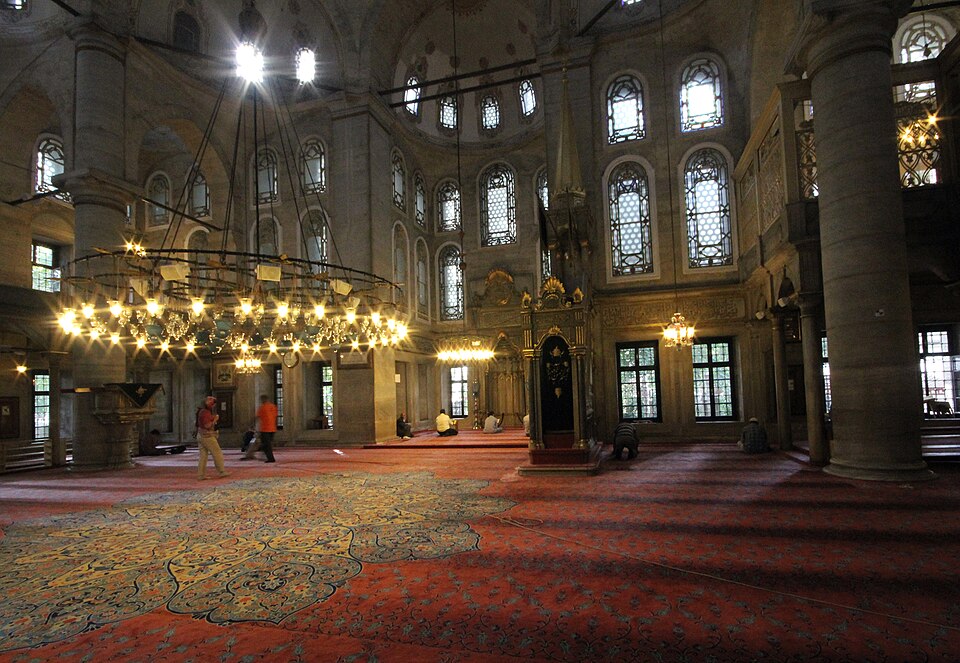
Eyüp Sultan Tomb is one of the holiest places in the Islamic world, where the blessed grave of Abu Ayyub al-Ansari is located. As the most visited tomb after Mecca, Medina, and Jerusalem, this sacred place has continued to be a refuge for hearts of the faithful for centuries.
\n\nWho Was Abu Ayyub al-Ansari?
\n\nKhalid ibn Zayd Abu Ayyub al-Ansari was a great companion from the Khazraj tribe of Medina. His place in Islamic history begins with hosting the Prophet (pbuh) in his home.
\n\nWhen the Prophet (pbuh) migrated from Mecca to Medina, the people of Medina competed to host him. The Prophet said he would stay in the house of Abu Ayyub, whose home was nearest to where his camel knelt. This house became one of the most sacred homes in Islamic history.
\n\nAbu Ayyub participated in all the battles in which the Prophet took part, including Badr, Uhud, and the Trench. His life is the finest example of devotion to Islam.
\n\nHistory of the Tomb
\n\nAbu Ayyub participated in jihad during the siege of Istanbul in 669 despite being in his 80s and passed away during this siege. In accordance with his will, he was buried at the nearest point to the walls of Istanbul.
\n\nHis grave was discovered by Akshemseddin after the conquest of Istanbul in 1453. Fatih Sultan Mehmed immediately had a tomb built over it.
\n\nThe current tomb building was rebuilt during the reign of Sultan Selim III (1798-1800). The tomb is an octagonal-plan structure, and its interior is adorned with precious tiles, calligraphy, and special fabrics.
\n\nSpiritual Atmosphere
\n\nThe moment you step into the tomb, the noise and rush of the outside world comes to an end. Inside, a deep peace and tranquility prevails. A faint scent of oud wood and rose can be felt in the air.
\n\nThe green cover over the blessed grave is one of the most important symbols of Islamic tradition. The calligraphy on the cover features Quranic verses and prayers.
\n\nThe Iznik tiles adorning the tomb's walls bear elegant floral motifs in blue and white tones. In the light of the ceiling decorations and chandelier, these tiles virtually transform the space into a corner of paradise.
\n\nVisitors recite the Holy Quran, pray at the graveside, and send Fatiha to Abu Ayyub's soul. Many people cannot hold back their tears here, for the spiritual weight of the place penetrates the deepest depths of the heart.
\n\nVisitation Etiquette
\n\nThere are certain etiquette guidelines to observe when visiting Eyüp Sultan Tomb:
\n\nBeing in a state of ablution: Visiting the tomb with ablution is a sunnah. This is both a spiritual preparation and an expression of respect.
\n\nBeing quiet and calm: Speaking loudly, using phones, or making noise inside the tomb is inappropriate. Peace and tranquility should be maintained.
\n\nReciting Quran and prayers: Reciting Surah Yasin, Fatiha, and Ikhlas at the tomb carries great reward. It has become customary to send Fatiha to Abu Ayyub's soul when praying.
\n\nIntention and sincerity: The visit should be made for the sake of Allah. Prayers are directed to Allah, not to the tomb; the tomb visit is to benefit from the spiritual atmosphere of the place and to honor the memory of a righteous servant.
\n\nVisitors from Around the World
\n\nEyüp Sultan Tomb is a place visited not only by the people of Istanbul but by Muslims from all over the world. Every year, millions of people come from all corners of the world to pray in the presence of Abu Ayyub.
\n\nThe tomb experiences especially heavy visitor flows during the month of Ramadan, holy nights, and religious holidays. During these periods, long queues form in front of the tomb; yet no visitor complains about the wait, because even waiting is an act of worship.
\n\n\n\n
Eyüp Sultan Tomb has continued to be Istanbul's spiritual heart for five centuries. Every moment spent in the presence of Abu Ayyub al-Ansari allows a person to detach from worldly preoccupations and return to their soul. This tomb is not merely a place to visit; it is a refuge where sorrows are shared, hopes are renewed, tears flow, and hearts find peace. A Muslim who has not visited Eyüp Sultan at least once in their life has been deprived of a great spiritual blessing.