The Sword-Girding Tradition at Eyup Sultan: Sacred Ceremony of Ottoman Sultans
20 February 2026 - Eyüp Sultan Camii
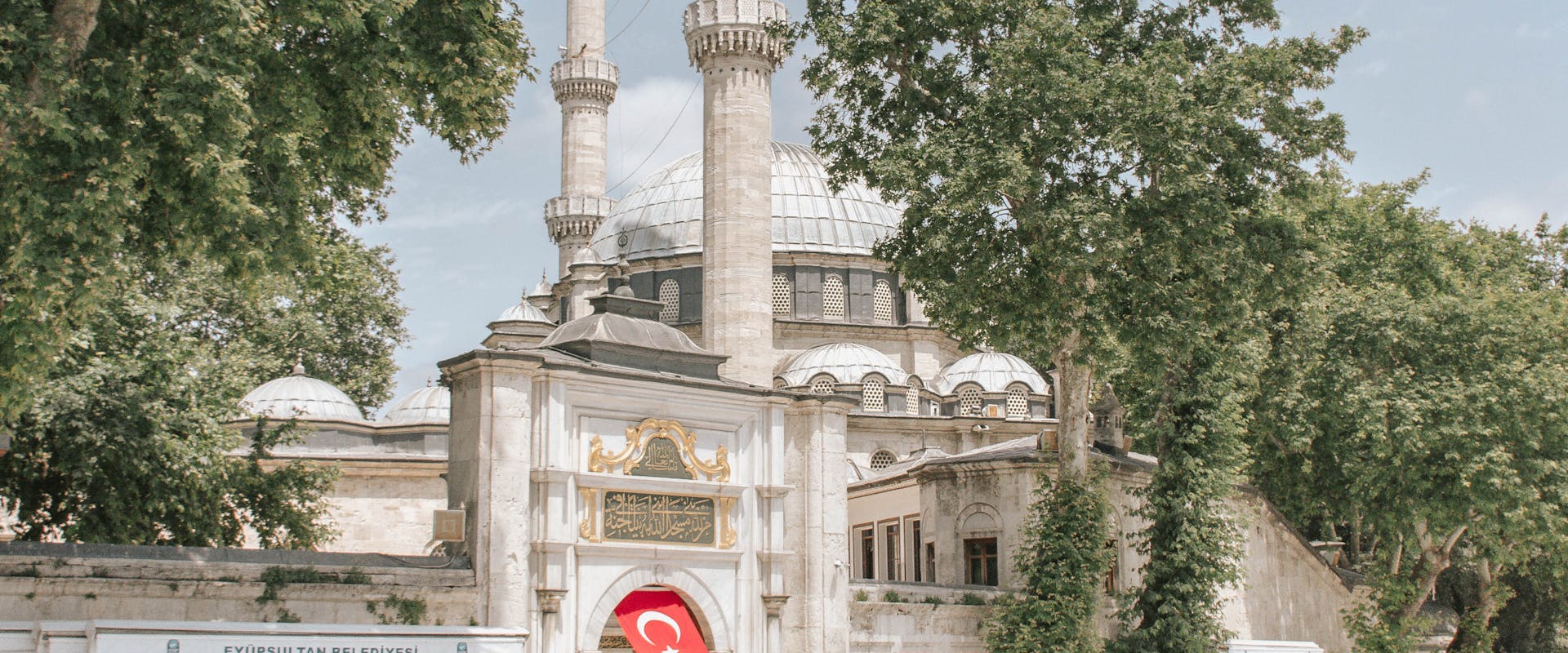
In the Ottoman Empire, a sultan's accession to the throne was not merely a political transfer of power; it was a sacred ceremony carrying profound spiritual significance. The most important element of this ceremony was the sword-girding ceremony held at Eyüp Sultan Mosque. This tradition, the Ottoman equivalent of the Western coronation ceremony, was a unique practice that distinguished the Ottomans from other Islamic states.
\n\nOrigins of the Tradition
\n\nThe history of the sword-girding tradition dates back to 1453, when Fatih Sultan Mehmed conquered Constantinople. After the conquest, Fatih had the tomb of Abu Ayyub al-Ansari found and built a tomb and mosque. From this date on, every new sultan would come to Eyüp Sultan upon accession and gird the sword of Hz. Omar, thereby proclaiming both his religious and political authority.
\n\nThis tradition was actually the Ottoman interpretation of the bay'ah tradition in Islamic history. The sultan would pledge to establish justice on earth as the caliph of Allah. The sword was the symbol of this justice and the authority to use power.
\n\nStages of the Ceremony
\n\nThe sword-girding ceremony was conducted in an extremely formal and magnificent manner. The new sultan would come to Eyüp Sultan from Topkapi Palace via the imperial caique over the Golden Horn. Both sides of the Golden Horn would overflow with people, and boats would be decorated.
\n\nWhen the sultan arrived at Eyüp Sultan, he would first visit the tomb and pray in the presence of Abu Ayyub al-Ansari. Then he would proceed to the mosque and perform two rak'ahs of prayer. After the prayer, the Sheikh al-Islam or a tariqa sheikh would gird the sultan with the sword.
\n\nThe person who girded the sword was usually a respected scholar or sheikh. After Fatih, this duty was mostly assumed by the Sheikh al-Islam. During the girding, prayers were recited and the sultan was reminded to be just, protect the rights of the oppressed, and exalt Islam.
\n\nWhich Swords Were Girded?
\n\nOttoman sultans girded different swords in different periods. Among the most commonly girded swords were the sword of Hz. Omar, the sword of Hz. Osman, and the sword of Osman Gazi. Each sword had a separate symbolic meaning: Hz. Omar's sword represented justice, Hz. Osman's represented the caliphate, and Osman Gazi's represented dynastic continuity.
\n\nPolitical and Spiritual Significance
\n\nThe sword-girding ceremony was the source of the sultan's legitimacy both religiously and in the eyes of the public. A sultan who had not girded his sword at Eyüp Sultan would not be fully recognized as legitimate by the people. Therefore, even sultans who came to power through rebellions or extraordinary circumstances would perform the sword-girding ceremony at Eyüp Sultan at the first opportunity.
\n\nThe ceremony was also one of the rare occasions when the sultan met with the public. Gold and silver coins were thrown to the people along the route, and celebrations were held. In this way, the new sultan's generosity and connection with the people were established from the first day.
\n\n\n\n
The sword-girding tradition continued until the end of the Ottoman Empire. The last sultan to gird a sword was Sultan Vahdettin. This tradition is one of the practices that most clearly demonstrates the central position and spiritual importance of Eyüp Sultan Mosque in Ottoman political life. Everyone who visits Eyüp Sultan today can feel the historic moments that took place in this sacred space over the centuries.