History of the Golden Horn and Eyup Sultan: The Spiritual Shore
15 February 2026 - Eyüp Sultan Camii
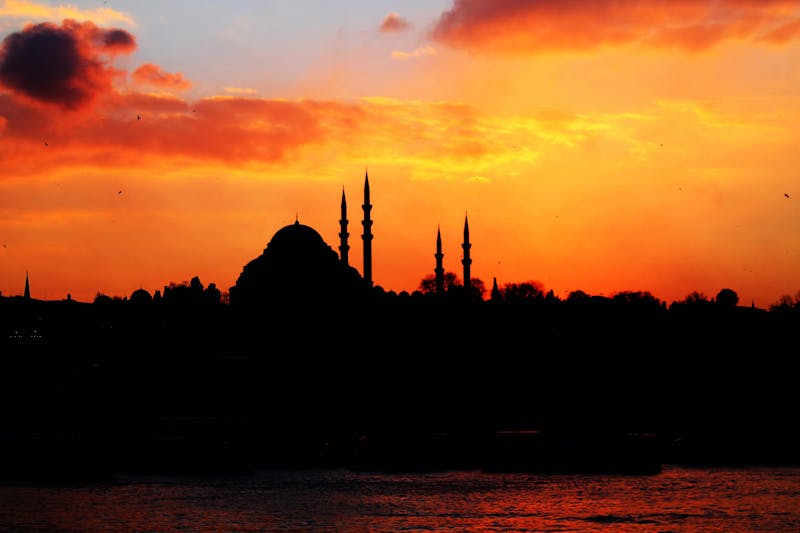
The Golden Horn is a natural harbor and waterway stretching through the heart of Istanbul that has shaped the city's history. Also known as the Golden Horn, this unique geography has been a meeting point of civilizations for centuries. The most spiritual point of the Golden Horn is undoubtedly the Eyüpsultan district, where Eyüp Sultan Mosque rises on its shore.
\n\nThe Name and Geography of the Golden Horn
\n\nThe Golden Horn is approximately 7.5 kilometers long and 750 meters at its widest point. Its Turkish name 'Halic' comes from the Arabic word meaning 'gulf.' Westerners call it the Golden Horn because golden reflections form on the water at sunset and its shape resembles a horn.
\n\nThe Golden Horn is an estuary formed where the Alibeykoy and Kagithane streams merge and flow into the Sea of Marmara. This natural formation has served as a safe harbor throughout history and increased Istanbul's strategic importance.
\n\nIstanbul Sieges and the Golden Horn
\n\nThe Golden Horn played a key role in Istanbul's defense. During the Byzantine period, a massive chain stretched across the mouth of the Golden Horn to prevent enemy navies from entering. In 1453, Fatih Sultan Mehmed overcame this obstacle by transporting ships overland into the Golden Horn, thereby conquering Constantinople.
\n\nThis historic event changed the fate of the Golden Horn and Eyüp Sultan forever. After the conquest, the tomb of Abu Ayyub al-Ansari was found on the Golden Horn shore, and this place became one of the holiest sites in the Islamic world.
\n\nThe Golden Horn and Eyüpsultan in the Ottoman Period
\n\nDuring the Ottoman period, the Golden Horn was the commercial and cultural heart of Istanbul. Shipyards, workshops, promenade areas, and palaces lined its shores. Eyüpsultan was positioned at the upper end of the Golden Horn, like a spiritual capital.
\n\nSultans and statesmen would come to Eyüp Sultan via imperial caiques over the Golden Horn. These journeys for Friday prayers, holidays, and especially sword-girding ceremonies were the most magnificent moments of the Golden Horn.
\n\nThe Golden Horn shores were also the most important center of Ottoman burial culture. The cemeteries stretching from Eyüpsultan along the Golden Horn were stone-carved expressions of the Ottoman understanding of death and the afterlife.
\n\nPierre Loti and the Golden Horn View
\n\nFrench writer Pierre Loti climbed to the hill in Eyüpsultan in the 19th century to watch the Golden Horn view and was deeply moved by this scenery. Today, Pierre Loti Hill, which bears his name, offers the most beautiful panoramic view of the Golden Horn.
\n\nWhen viewed from the hill, the blue of the Golden Horn merges with the green of Eyüpsultan. The mosque minarets, the roofs of old houses, and in the distance the silhouette of Suleymaniye create one of Istanbul's most iconic images.
\n\nToday's Golden Horn and Eyüp Sultan
\n\nThe Golden Horn, polluted by industrialization in the second half of the 20th century, has been revived through rehabilitation works beginning in the 1980s. Today, the Golden Horn shores are equipped with parks, walking paths, and cultural venues.
\n\nWhen you walk from Eyüp Sultan Mosque toward the Golden Horn, you encounter a unique scenery where history and modernity intertwine. Old fishing boats, modern ferries, waterside cafes, and the historic silhouette rising behind... The Golden Horn is a living bridge connecting Istanbul's past with its present.
\n\n\n\n
It is impossible to think of Eyüp Sultan without the Golden Horn, or the Golden Horn without Eyüp Sultan. These two elements are inseparable parts of Istanbul's spiritual geography. Those who visit Eyüp Sultan can personally experience this historic bond by walking along the Golden Horn shore and climbing Pierre Loti Hill.