The Night of Miraj 2027: Isra and Miraj and Eyup Sultan
05 November 2026 - Eyüp Sultan Camii
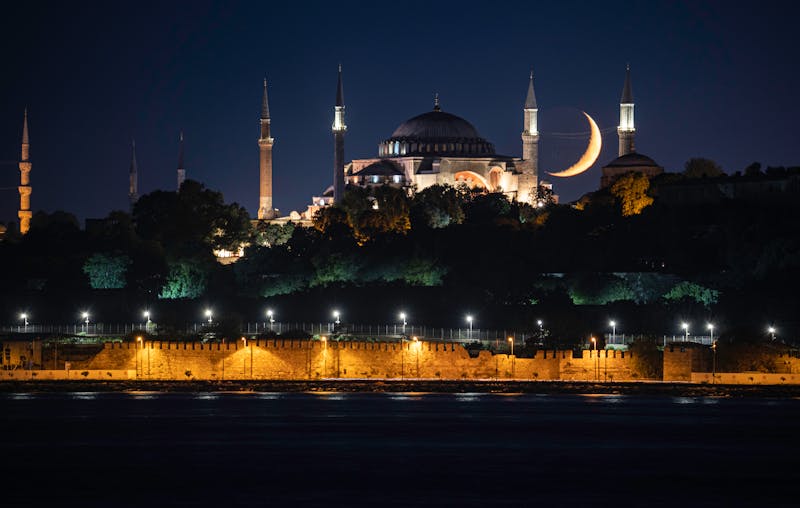
When Is the Night of Miraj in 2027?
According to the religious calendar of the Turkish Presidency of Religious Affairs (Diyanet), Miraç Kandili, the Night of Miraj, falls on Monday, 4 January 2027. The holy night begins with the sunset prayer on Monday evening and lasts until Tuesday morning. It is commemorated on the 27th night of the Hijri month of Rajab.
Islamic scholars have expressed different views on the year and night in which the Isra and Miraj took place; it is generally accepted that it happened around one to one and a half years before the Hijra, in the last years of the Meccan period. For centuries Muslims have adopted the 27th night of Rajab as the night on which this miracle is remembered.
What Are the Isra and the Miraj?
The Isra is the Night Journey of the Prophet (peace be upon him) from al-Masjid al-Haram in Mecca to al-Masjid al-Aqsa in Jerusalem. The Miraj is his ascension from al-Masjid al-Aqsa to the heavens. The Quran describes the Isra as follows: "Glory be to the One Who took His servant by night from the Sacred Mosque to the Farthest Mosque, whose surroundings We have blessed, so that We may show him some of Our signs." (al-Isra, 1)
The Miraj is alluded to in Surah an-Najm, which tells that the Prophet saw Gabriel in his true form at Sidrat al-Muntaha and witnessed some of the greatest signs of his Lord (an-Najm, 13-18). You can read both surahs with Arabic text and translation on our Surah al-Isra and Surah an-Najm pages.
The event came at one of the hardest times of the Prophet's life. Following the "year of sorrow", in which his wife Khadija and his uncle Abu Talib passed away and he was stoned in Ta'if, the Miraj is seen as a consolation and an honour from Allah to His Messenger.
The Three Gifts of the Miraj
According to authentic hadith, the Prophet returned from the Miraj with three gifts for his community (Muslim, Iman 279):
- The five daily prayers: The prayer was made obligatory on the night of the Miraj, which is why it is called "the miraj of the believer"; every prayer is the servant's ascent to his Lord. You can learn how to pray step by step in our prayer guide.
- The last two verses of Surah al-Baqarah: Known as "Amana al-Rasul", these verses summarise the pillars of faith and the prayer of the community.
- Glad tidings: The good news that the major sins of those in his community who die without associating partners with Allah may be forgiven.
How to Spend the Night of Miraj
No specific prayer with a set form has been reported in authentic sources for the Night of Miraj. Like the other holy nights, it is spent with general acts of worship. Since the Miraj is the night on which prayer was made obligatory, the most meaningful worship of this night is prayer itself:
- Praying maghrib and isha in congregation, making up any missed prayers and spending part of the night in voluntary prayer.
- Making a promise about prayer: For those who neglect their prayers, this night is a beautiful turning point to start praying the five daily prayers regularly.
- Reading the Quran: Reading Surahs al-Isra and an-Najm with their meaning, and memorising or reciting the last two verses of al-Baqarah.
- Repentance: Seeking forgiveness with the supplication of repentance and forgiveness.
- Sending blessings and praying: Sending salawat upon the Prophet and praying for al-Masjid al-Aqsa and the people of Palestine.
The Night of Miraj at Eyup Sultan
When the Night of Miraj falls in midwinter, Eyup Sultan has a particularly peaceful atmosphere. On the early dark evenings the courtyard is lit up, and towards the isha prayer the congregation overflows into the courtyards. For many Istanbulites, visiting the tomb of Abu Ayyub al-Ansari after praying at the mosque is an essential part of the holy night.
Abu Ayyub al-Ansari was the Companion honoured with hosting the Prophet in his home in Medina. Visiting his tomb on the Night of Miraj, when love for the Prophet comes to the fore, has a special meaning for visitors. To learn more about his life, read our article on the life of Abu Ayyub al-Ansari.
In January the Golden Horn shore can be cold and windy; we recommend dressing warmly and carrying a bag for your shoes inside the mosque.
Visiting Eyup Sultan on a Holy Night
- Come early: On kandil nights Eyup Sultan Mosque is one of the most crowded mosques in Istanbul. Arriving before the sunset (maghrib) prayer makes it easier to find a place inside and to visit the tomb more calmly.
- Use public transport: Parking in the area is very difficult on these nights. The Eyüpsultan Teleferik stop of the T5 tram or the Golden Horn ferry are the easiest options. See our transport guide for details.
- Check the programme in advance: On kandil nights the imperial mosques of Istanbul usually hold Quran recitation, mawlid and prayer programmes. You can learn the programme at Eyup Sultan Mosque from announcements of the Istanbul Mufti's Office or from the mosque staff.
- Plan your tomb visit: Long queues can form in front of the tomb on holy nights. For visiting hours and etiquette read Tomb Visiting Hours and Rules.
- Check the prayer times: The holy night begins with the sunset prayer. See our prayer times page for maghrib and isha times.
- Clothing and belongings: Keep an eye on your valuables in the crowd. Women are expected to cover their hair inside the mosque, and both men and women should wear clothing that covers the shoulders and knees.