Ottoman Sultans and Eyup Sultan Mosque: The Sword-Girding Tradition
23 March 2026 - Eyüp Sultan Camii
What Is the Sword-Girding Ceremony?
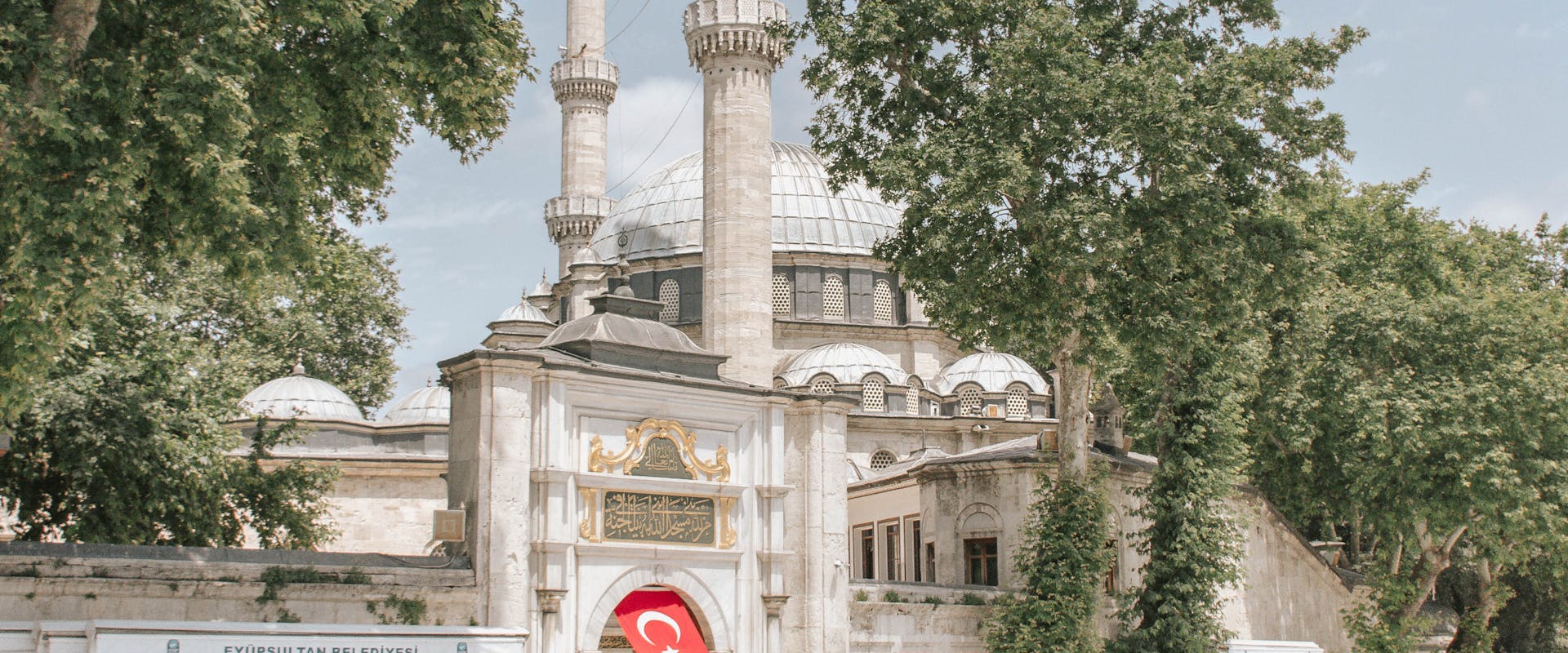
The sword-girding ceremony was one of the most important state rituals in the Ottoman Empire, formalizing a new sultan's accession to the throne. This ceremony was held at Eyup Sultan Mosque and confirmed the sultan's legitimacy from both religious and military perspectives. It can be considered the Ottoman equivalent of coronation ceremonies in Europe; however, this ritual, shaped within Islamic traditions, holds a unique position with its distinctive characteristics.
In Ottoman state philosophy, the sword-girding tradition was a symbolic expression that the sultan had assumed his duties as both head of religion and head of state. While the girded sword represented justice and power, holding the ceremony at the shrine of Eyup Sultan provided a spiritual connection of profound significance.
The Origin: Fatih Sultan Mehmed
The beginning of the sword-girding tradition is directly linked to the conquest of Istanbul. After conquering Istanbul in 1453, Fatih Sultan Mehmed discovered the tomb of Abu Ayyub al-Ansari and had a mausoleum and an adjacent mosque built over it. This sacred site was designated as the venue where Ottoman sultans would hold their sword-girding ceremonies for centuries to come.
Behind Fatih Sultan Mehmed's initiation of this tradition lay a deep political and religious strategy. Girding a sword under the spiritual patronage of Abu Ayyub al-Ansari, who was the host of Prophet Muhammad and was martyred during the siege of Istanbul, granted the sultan tremendous legitimacy. This tradition became a crucial element strengthening the Ottoman dynasty's claim to leadership in the Islamic world.
Ceremony Procedure
The sword-girding ceremony was conducted within a specific protocol. On the day of the ceremony, the sultan would depart from Topkapi Palace and arrive at Eyup Sultan by boat across the Golden Horn, accompanied by a magnificent procession. The grand vizier, sheikh al-Islam, viziers, and other state dignitaries accompanied the sultan.
- Preparation: Before the ceremony, the mosque and its surroundings were meticulously decorated, and the public lined up along the route.
- Prayer: The sultan would first perform two units of prayer at Eyup Sultan Mosque.
- Tomb Visit: He would then visit the mausoleum of Abu Ayyub al-Ansari and offer prayers.
- Sword-Girding: The sheikh al-Islam or a prominent religious scholar of the era would gird the sword upon the sultan. Usually, the sword of Caliph Omar, Caliph Uthman, or Osman Gazi was preferred.
- Prayers and Allegiance: Following the sword-girding, prayers were offered and state officials pledged their allegiance to the new sultan.
- Return: The sultan would return to the palace with another grand procession.
Notable Sword-Girding Ceremonies
Fatih Sultan Mehmed (1453): This holds special importance as the first sword-girding ceremony. Held immediately after the conquest, this ceremony marked the beginning of a new tradition that would endure for centuries.
Yavuz Sultan Selim (1512): The sword-girding ceremony of Yavuz Sultan Selim, who dethroned his father Bayezid II to become sultan, carried great political significance. For Selim, who was seeking legitimacy, the ceremony at Eyup Sultan played a critical role in gaining the support of both the public and state officials.
Suleiman the Magnificent (1520): This ceremony, symbolizing the beginning of the Ottoman Empire's most glorious era, went down in history for its grandeur. Suleiman's sword-girding gained an international dimension with the participation of foreign ambassadors.
Sultan Mahmud II (1808): The sword-girding ceremony of the reformist sultan who would later abolish the Janissary corps took place during a turbulent period. This ceremony demonstrated that traditions continued even as the empire underwent modernization.
Significance of Eyup Sultan for the Ottoman Empire
Eyup Sultan Mosque and its Mausoleum held a meaning far beyond being an ordinary place of worship for the Ottoman Empire. It was a site where the sacredness of the state and the legitimacy of the sultanate were certified. The holding of sword-girding ceremonies here transformed Eyup Sultan into the spiritual capital of the Ottoman Empire.
Ottoman sultans would visit Eyup Sultan's Mausoleum before important decisions and before going to war. It was believed that prayers offered here would be accepted, and spiritual strength was sought. Furthermore, many sultans, grand viziers, and statesmen willed to be buried in the vicinity of Eyup Sultan, once again demonstrating the central position of the area in Ottoman history.
Legacy in Modern Times
With the end of the Ottoman Empire, sword-girding ceremonies became a thing of the past. However, traces of this tradition continue to live on in different forms today. Eyup Sultan Mosque still welcomes millions of visitors as one of Turkey's most important pilgrimage sites.
Today, visitors who come to Eyup Sultan for circumcision ceremonies, military send-offs, and special prayers are actually continuing a tradition that has lasted for centuries. Even without the sword-girding ceremony, the tradition of visiting this sacred site at important life milestones remains very much alive. Eyup Sultan Mosque continues to increase its value as a historical and spiritual heritage that bridges the past and the future.