Eyup Sultan's Place in the Ottoman Empire: The Spiritual Capital
05 February 2026 - Eyüp Sultan Camii
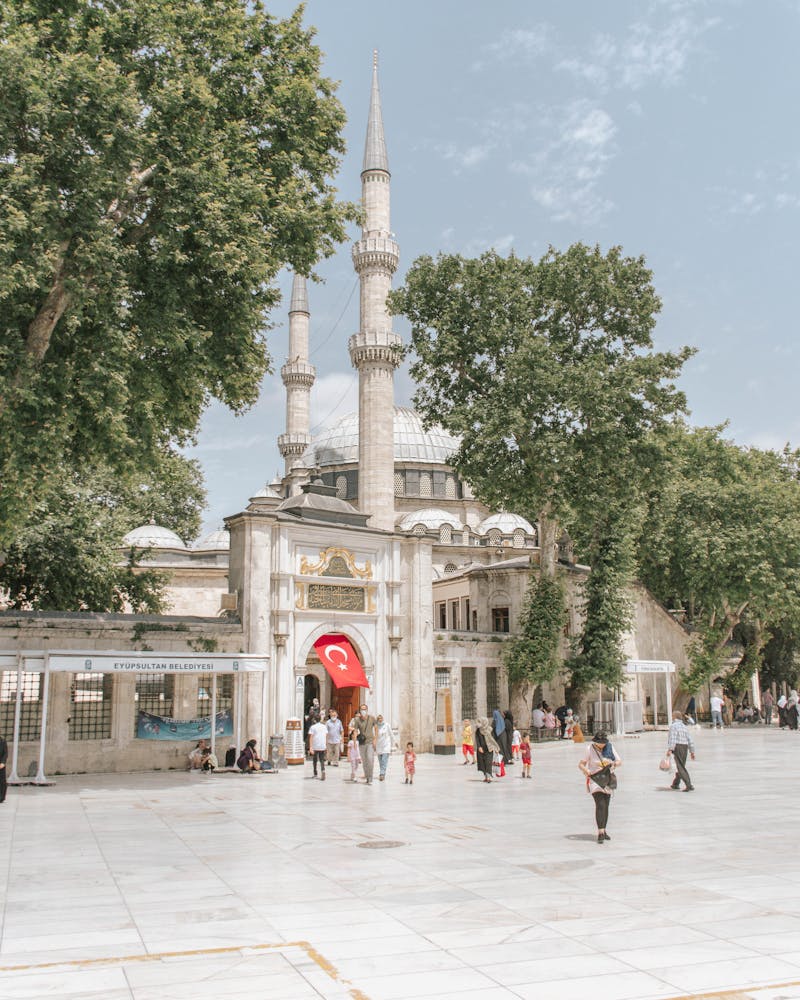
In the six-hundred-year history of the Ottoman Empire, Eyüpsultan was recognized as the spiritual capital of Istanbul, beyond it being the political capital. The presence of Abu Ayyub al-Ansari's tomb here made this district one of the holiest places in the Islamic world after Mecca, Medina, and Jerusalem.
\n\nThe Sultans' Relationship with Eyüp Sultan
\n\nOttoman sultans showed special reverence and devotion to Eyüp Sultan. Their sword-girding upon accession, occasionally performing Friday prayers here, and visiting the tomb before important decisions were concrete signs of this devotion.
\n\nSuleiman the Magnificent had special affection for Eyüp Sultan. He would visit the tomb before and after campaigns and pray for victory. He established endowments for the mosque and tomb ensuring their continuous maintenance.
\n\nSultan Abdulhamid II was one of the sultans who showed the most interest in Eyüp Sultan. He frequently held his Friday processions here and allocated special budgets for the mosque's upkeep and beautification of its surroundings.
\n\nReligious and Cultural Center
\n\nIn the Ottoman period, Eyüpsultan was not only a place of worship but also a center of knowledge and wisdom. The madrasahs, dervish lodges, and libraries established around the mosque made it one of Istanbul's most important educational centers.
\n\nThousands of scholars were trained over centuries in the madrasahs within the Eyüp Sultan complex. These madrasahs were respected institutions where Islamic sciences such as exegesis, hadith, jurisprudence, and Sufism were taught.
\n\nSufi traditions also took deep root in Eyüpsultan. Many tariqa lodges were located in the area, with the Naqshbandi and Khalwati orders showing a strong presence. These lodges played an important role in the spiritual education of the public.
\n\nSocial Life and Traditions
\n\nIn the Ottoman period, Eyüpsultan was the center of a vibrant social life. People would flock to Eyüp Sultan during holidays, kandil nights, and blessed days.
\n\nCircumcision ceremonies had become a tradition particularly associated with Eyüp Sultan. Princes' circumcision celebrations were held here with magnificent ceremonies. Common people also considered having their children's circumcision at Eyüp Sultan as blessing and good fortune.
\n\nThe soup kitchen tradition was one of Eyüpsultan's most deep-rooted traditions. Hundreds of people were fed daily at the soup kitchen within the complex, with tables set for the poor, travelers, and students. This tradition was one of the finest examples of the Ottoman waqf civilization.
\n\nEyüpsultan Cemeteries
\n\nIn the Ottoman period, being buried near Eyüp Sultan was considered a great honor. Over centuries, Eyüpsultan and its surroundings became Istanbul's largest and most important Muslim cemetery.
\n\nGrand viziers, sheikh al-Islams, scholars, poets, and statesmen rest here. The gravestones present some of the finest examples of Ottoman stone craftsmanship. Each gravestone is a historical document providing information about the social structure, artistic understanding, and death culture of its era.
\n\n\n\n
In the Ottoman Empire, Eyüpsultan was a unique place where religious, political, cultural, and social life intersected. This sacred district, where sultans sought legitimacy, scholars taught knowledge, dervishes sought truth, and the public found peace, continues to sustain the same spiritual atmosphere today.