Ottoman Dignitaries Buried in Eyupsultan
Statesmen and dynasty members who found their eternal rest in Eyupsultan
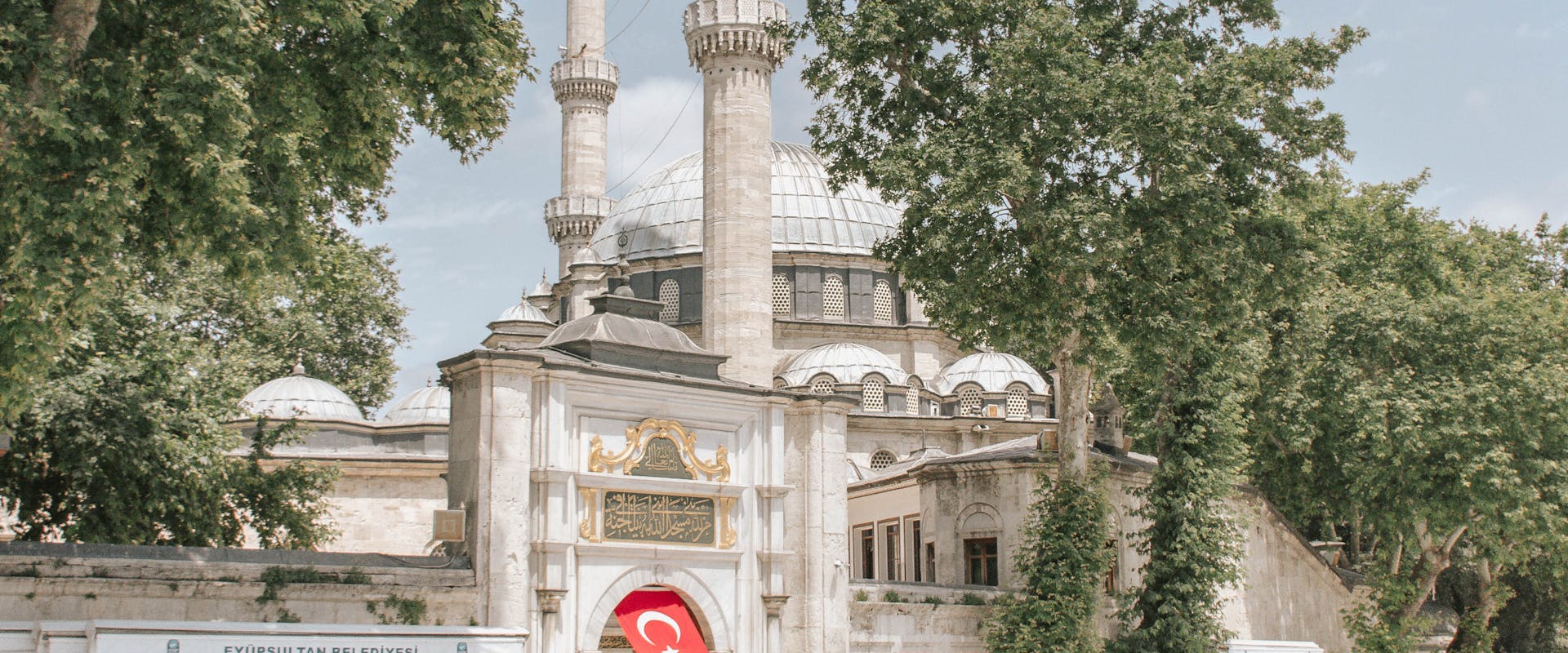
Spiritual Capital of the Ottoman Empire
Eyupsultan, this sacred district where the holy grave of Abu Ayyub al-Ansari is located, has been the eternal resting place of the most important figures of the Ottoman Empire. Sultans, grand viziers, queen mothers, commanders, and scholars are buried here.
The tombs and cemeteries in Eyupsultan house the most distinguished figures of Ottoman civilization. This page aims to introduce the great personalities resting in the area.
Sultan Mehmed V Reshad
The only Ottoman sultan buried in Eyupsultan
Mehmed V Reshad
35th Ottoman Sultan
Sultan Mehmed V Reshad (November 2, 1844 - July 3, 1918) was the 35th sultan of the Ottoman Empire. Son of Sultan Abdulmejid, he became sultan after the deposition of Abdulhamid II in 1909. His reign coincided with the Balkan Wars and World War I.
Known as a modest sultan fond of poetry and literature, Sultan Reshad passed away on July 3, 1918. He was buried in his tomb in Eyupsultan, built by Architect Kemaleddin Bey between 1911-1912.
The tomb is a fine example of Ottoman neoclassical style and one of the important works of late Ottoman architecture.
Grand Viziers Buried in Eyupsultan
Among the highest officials of the Ottoman Empire buried in Eyupsultan
Sokullu Mehmed Pasha
1505 - 1579Sokullu Mehmed Pasha, who served as grand vizier under three sultans, is one of the most powerful statesmen in Ottoman history. His tomb in Eyupsultan was built by the great architect Mimar Sinan. He is known for the Suez Canal and Don-Volga Canal projects.
Ferhat Pasha
d. 1595Ferhat Pasha, one of the grand viziers of Murad III's reign, played important roles in the Ottoman-Safavid wars. He was the architect of the 1590 Treaty of Istanbul (Treaty of Ferhat Pasha). His tomb is in Eyupsultan.
Pertev Mehmed Pasha
d. 1572He served as vizier during the reigns of Suleiman the Magnificent and Selim II. His tomb in Eyupsultan, built by Mimar Sinan, is an important work reflecting the architectural understanding of the era.
Siyavush Pasha
16th centurySiyavush Pasha, appointed twice to the grand vizierate under Murad III, played an influential role in Ottoman politics. His tomb in Eyupsultan is recorded as a work of Mimar Sinan.
Husrev Mehmed Pasha
d. 1855Husrev Mehmed Pasha, grand vizier of Mahmud II's reign, was one of the sultan's closest supporters during the abolition of the Janissary Corps. He was an important statesman of the Tanzimat period.
Ayas Mehmed Pasha
Suleiman EraAyas Mehmed Pasha, one of the first grand viziers of Suleiman the Magnificent, was of Albanian origin and raised through the devshirme system. Known for his merit in administration, his tomb is in Eyupsultan.
Queen Mothers and Dynasty Members
Dynasty elders who found their eternal rest in Eyupsultan
Mihrishah Valide Sultan
Mihrishah Valide Sultan, mother of Sultan Selim III, is one of the most philanthropic queen mothers in Ottoman history. She had the complex named after her built in Eyupsultan, forming one of the area's most important building ensembles. Her tomb is a masterpiece of elegant architecture.
Shah Sultan
Shah Sultan, daughter of Sultan Mustafa III, was a distinguished member of the Ottoman dynasty. Her tomb in Eyupsultan is an elegant structure reflecting the era's architectural style. She was known for her philanthropy and cultural activities.
Adile Sultan
Adile Sultan, daughter of Sultan Mahmud II, is one of the most important female poets of the Ottoman dynasty. She produced works in the Divan poetry tradition and was known for her philanthropy. Her tomb in Eyupsultan bears traces of Ottoman women's identity in literature and art.
Commanders and Statesmen
Great names who expanded the borders and governed the state
Lala Mustafa Pasha
d. 1580
He was the great Ottoman commander who conquered Cyprus as commander-in-chief of the 1570-1571 campaign. He also achieved important successes in the Safavid campaigns. His tomb in Eyupsultan is a testament to his military achievements.
Nakkash Hasan Pasha
d. 1623
Nakkash Hasan Pasha, also known as an artist, was a statesman who left his mark in both military and cultural fields. Known for his mastery in painting, his tomb is in Eyupsultan.
Feridun Ahmed Pasha
d. 1583
Feridun Ahmed Pasha, one of the important chancellors of the Ottoman Empire, is known for his work Munsheatu's-Selatin, the most comprehensive compilation of Ottoman diplomatic correspondence. His tomb is in Eyupsultan.
Scholars, Sufis and Other Figures
Great scholars and mystics resting in the spiritual atmosphere of Eyupsultan
Scholars and Sufis
One of the spiritual leaders of Eyupsultan, a Sufi scholar.
One of the leading figures of Ottoman scholarly tradition, a madrasa teacher.
One of the important sheikhs of the Khalwatiyya order, known for his guidance activities.
Poets and Other Figures
One of the important female Divan poets of the Ottoman Empire. Known for her elegant style.
One of the important figures in Ottoman intellectual life, known for his ideas of 'Private Enterprise and Decentralization'.
One of the important figures of the Ottoman finance organization, a personality distinguished in state service.
Besides these, many other Ottoman dignitaries' tombs and graves are in Eyupsultan. The cemeteries in the area are virtually an open-air museum of Ottoman history.
Discover the Spiritual Atmosphere of Eyupsultan
Visit the tombs and cemeteries bearing the traces of centuries