10 Lessons From the Life of Eyup Sultan
06 November 2026 - Eyüp Sultan Camii
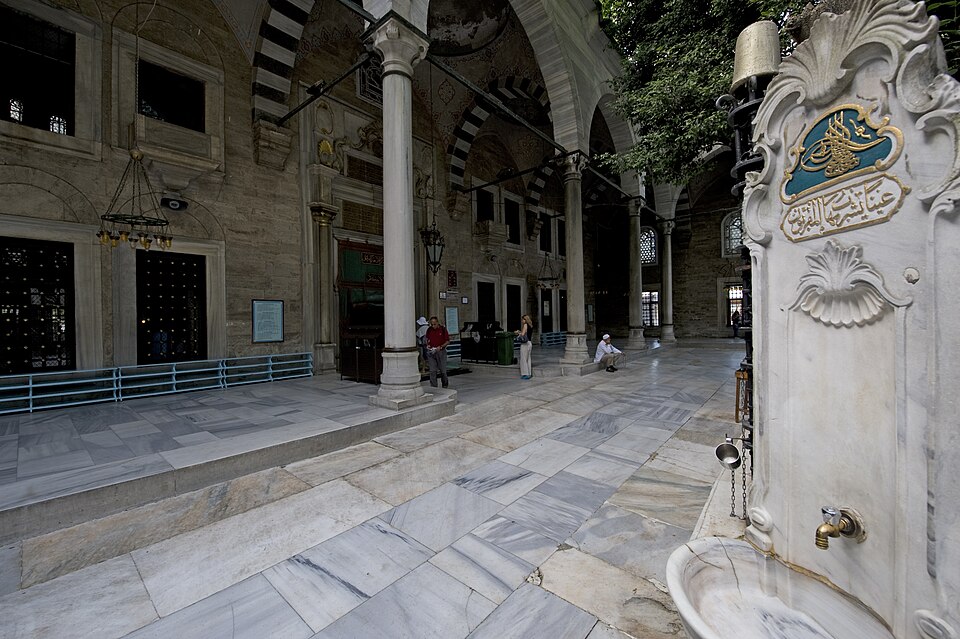
A saying is attributed to Hasan al-Basri, one of the generation who met the Companions: if the Companions saw how we live, they would be astonished at us, and if we saw how they lived, we would be astonished at them. To understand what this means, it is enough to look at the life of Eyup Sultan, Abu Ayyub al-Ansari. We told his life story in full in our article Who Was Eyup Sultan? In this article we have gathered ten moments from that life, and the lessons they still offer us today.
1. Opening the Door: "A Prophet Stays Where His Belongings Are"
When the Prophet entered Medina, everyone wanted to host him. He asked them to let his camel go its way, and it knelt on the plot where the Prophet's Mosque stands today. Abu Ayyub lost no time in carrying the Prophet's belongings into his home. When others kept inviting him, the Prophet said he would stay in the house where his belongings were (Ibn Hisham, al-Sira). This stay of about seven months wrote Abu Ayyub's name into history as "the host of the Prophet".
Lesson: Hurry when a door of goodness opens. Abu Ayyub did not deliberate; he saw the chance and acted at once.
2. Unable to Sleep Upstairs
Abu Ayyub's house had two floors. The Prophet wished to stay on the ground floor because many people would come and go. Abu Ayyub and his wife Umm Ayyub, however, were so uneasy walking above the Messenger of Allah that they could not rest at night. When a jar of water broke one night, they soaked it up with their only quilt so that no drop would fall below. In the morning Abu Ayyub pleaded with the Prophet until he moved upstairs (Muslim, Kitab al-Ashriba 171).
Lesson: Love is lived together with courtesy. Abu Ayyub's love had become a sensitivity never to cause his beloved the slightest trouble.
3. Eating From Where His Fingers Touched
Abu Ayyub's family sent food to the Prophet, and when the dish came back they looked for the place his fingers had touched and ate from there, seeking blessing. One day they sent a dish with garlic, and the Prophet sent it back untouched. When Abu Ayyub anxiously asked whether it was forbidden, the Prophet said it was not, but that he avoided its smell because he spoke with the angel of revelation. Abu Ayyub replied: "Then I dislike what you dislike." (Muslim, Kitab al-Ashriba 171)
Lesson: To love is to love what your beloved loves and to keep away from what he dislikes.
4. The Guard at the Door
One morning on the return from Khaybar, the Prophet stepped out of his tent and found Abu Ayyub waiting at the door with his sword. When he asked what he was doing, Abu Ayyub said he had guarded him all night, fearing the enemy might harm him. The Prophet raised his hands: "O Allah, protect Abu Ayyub as he spent the night protecting me." (Ibn Hisham, al-Sira)
Lesson: Service done when no one is watching is rewarded by Allah in the best way. This prayer accompanied Abu Ayyub all his life.
5. Standing Against Gossip
During the slander against Aisha, when Medina was in turmoil, Umm Ayyub began to speak of the matter. Abu Ayyub immediately asked: "If you were in Aisha's place, would you do such a thing?" When his wife said, "By Allah, I would not," he replied, "Aisha is far better than you." In Surah an-Nur, verse 12, the Quran tells believers that in such a situation they should think well of one another.
Lesson: A rumour is stopped before it spreads. This is the question to ask today before pressing the share button on social media.
6. Travelling to Egypt for a Single Hadith
To confirm a hadith he had heard from the Prophet, Abu Ayyub travelled in his old age from Medina to Egypt to see Uqba ibn Amir, who had heard it too. As soon as he had listened to it, he returned to Medina without delay (Ahmad ibn Hanbal, al-Musnad). The hadith said that whoever conceals a believer's fault, Allah will conceal his faults on the Day of Judgement. This journey is counted among the finest examples of the tradition of travelling in search of hadith.
Lesson: Sound knowledge takes effort. Before attributing a saying to the Prophet, one must find out whether he really said it.
7. Objecting to a Delayed Sunset Prayer
When Abu Ayyub passed through Egypt on a campaign, the governor Uqba ibn Amir delayed the sunset prayer. Abu Ayyub stood up and asked, "What prayer is this?" and reminded him of the Prophet's words: "My community will remain upon good as long as they do not delay the sunset prayer until the stars crowd together." (Abu Dawud, Kitab al-Salat 6)
Lesson: Faithfulness to the Sunna means being able to speak the truth courteously, whoever is in front of you.
8. Understanding "Do Not Throw Yourselves Into Destruction"
During the siege of Constantinople, when a Muslim charged alone into the enemy ranks, some said, "He has thrown himself into destruction." Abu Ayyub explained that the verse "Do not throw yourselves into destruction with your own hands" (al-Baqara 195) had in fact been revealed about the Ansar: once Islam had grown strong, they thought of turning to their property, vineyards and gardens and giving up spending and striving in the way of Allah. That was the real destruction (Abu Dawud, Kitab al-Jihad 22).
Lesson: The real danger is sinking into comfort and holding back from doing good.
9. A Warrior Past Eighty
The Prophet had said, "Constantinople will surely be conquered. What an excellent commander its commander will be, and what an excellent army that army will be" (Ahmad ibn Hanbal, al-Musnad). Years after this good news, when a campaign was launched against Constantinople in the Umayyad period, Abu Ayyub was over eighty. Still he did not let his age hold him back and joined the army. The sources relate that after the Prophet's death he took part in a campaign almost every year. He fell ill during the siege and asked to be buried at the farthest point they could reach in enemy land (Ibn Sa'd, al-Tabaqat).
Lesson: There is no retirement from service. While many today dream of spending their last years only at rest, Abu Ayyub gave his last breath on a path of goodness.
10. Choosing to Rest Far Away
Abu Ayyub could have died in Medina, the city of the Prophet, near his family. Instead he entrusted his grave to the foot of the walls of Constantinople, at the gate of a city where the call to prayer had not yet been heard. Eight centuries later, in 1453, the city was conquered; Akshamsaddin found his grave, and Sultan Mehmed the Conqueror built a mausoleum over it and a mosque beside it. The most visited spiritual site in Istanbul today is the fruit of that wish. For the discovery of the grave see our article Akshamsaddin and the Discovery of the Tomb.
Lesson: Some seeds grow at a time their sower will never see. A step taken sincerely can change the destiny of a city centuries later.
Love Is Shown by the Path, Not by Words
The Prophet said, "A person is with those he loves" (al-Bukhari, Kitab al-Adab 96; Muslim, Kitab al-Birr 165). Abu Ayyub's life shows how these words are lived: he loved the Prophet not only with his tongue and mind, but with his home, his wealth, his time and in the end his life. When we visit Eyup Sultan, remembering how he lived this love is the true gain of the visit.
To plan your visit see our guide to tomb visiting hours and etiquette, and for Eyup Sultan's other secrets read The Secret of Eyup Sultan Mosque.