Host of the Messenger: Eyup Sultan
06 November 2026 - Eyüp Sultan Camii
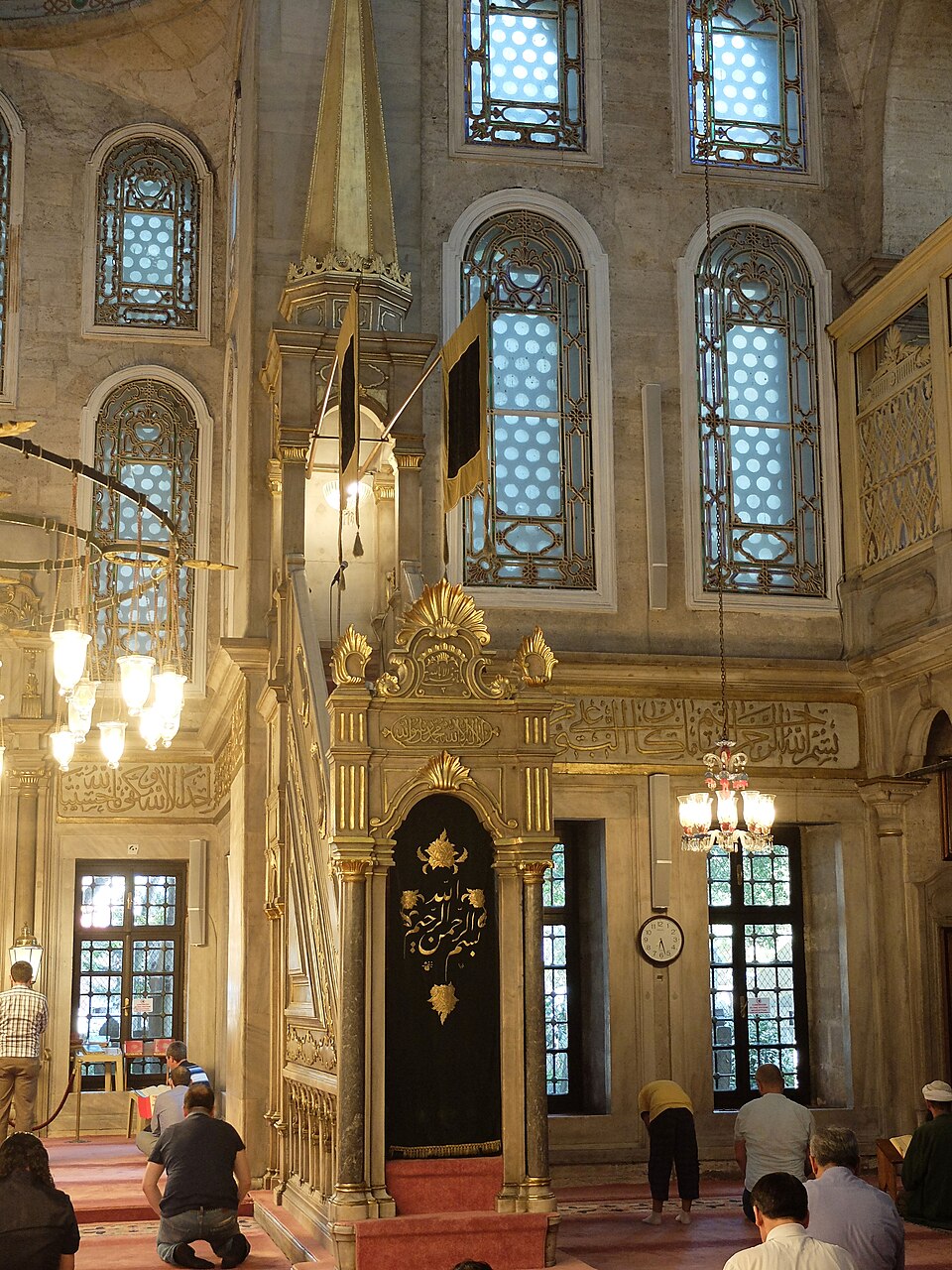
The title most often given to Eyup Sultan, in his mausoleum, in inscriptions and on the lips of the people of Istanbul, is "Mihmandar-i Rasul", the Host of the Messenger of Allah. The title rests on a memory that sets Abu Ayyub al-Ansari apart from all other Companions: when the Prophet migrated to Medina, he was the one who hosted him in his home for months. This article explains what "mihmandar" means, what happened in the house during those seven months and the legacy of this hospitality that reaches all the way to Istanbul.
What Does "Mihmandar" Mean?
Mihmandar comes from the Persian mihman, "guest", and the suffix -dar, "one who keeps": one who receives guests, a host. In the Ottoman state the word was also the name of an official post: the mihmandar was the official who welcomed foreign envoys and accompanied them on their journeys. "Mihmandar-i Rasul" or "Mihmandar-i Nabi" gives the word its highest meaning: the host of the Messenger of Allah.
How the Host Was Chosen
In 622, after staying a few days in Quba, the Prophet entered Medina. Along the way every clan seized his camel's reins, hoping to host him in their homes. The Prophet gently told them all that the camel was being guided and asked them to let it go. It knelt on the plot where the Prophet's Mosque stands today. The nearest house belonged to Abu Ayyub of the Banu al-Najjar, who immediately carried the Prophet's baggage into his home, and the Prophet became his guest (Ibn Hisham, al-Sira). There was a subtlety in this choice: the Banu al-Najjar were the family of the mother of the Prophet's grandfather Abd al-Muttalib. In this way the Prophet hurt no one's feelings and stayed among his relatives.
Seven Months in One House
The Prophet stayed in Abu Ayyub's house for about seven months, until the Prophet's Mosque and the rooms beside it were completed. These were the months in which the foundations of the Muslim community in Medina were laid, and many important events took place right next to this house:
- Building the Prophet's Mosque: The plot where the camel knelt was bought and work on the mosque began. The Prophet himself carried mud bricks alongside his Companions (al-Bukhari, Kitab Manaqib al-Ansar 45). Abu Ayyub's house stood right beside the building site.
- Brotherhood (mu'akhat): The emigrants from Mecca and the Ansar of Medina were declared brothers. Abu Ayyub's brother was Mus'ab ibn Umayr, the Companion who first taught Islam in Medina.
- The family's arrival: The Prophet sent Zayd ibn Haritha to bring the family he had left in Mecca, and they reached Medina during this period (Ibn Sa'd, al-Tabaqat).
Memories From Inside the House
Abu Ayyub's house had two floors. The Prophet chose the ground floor so that he could receive visitors easily. Abu Ayyub and his wife Umm Ayyub, however, were uneasy walking above the Messenger of Allah. When a water jar broke one night, they soaked up the water with their only quilt so that none would drip below. In the end, at Abu Ayyub's insistence, the Prophet moved upstairs (Muslim, Kitab al-Ashriba 171).
The hosts prepared food for the Prophet every day and, seeking blessing, ate from the place in the returned dish where his fingers had touched. Other families of Medina also took turns sending food; the Ansar regarded hosting their guest almost as a shared honour. For more of these memories, read our article 10 Lessons From the Life of Eyup Sultan.
Umm Ayyub: The Unseen Host
The title "mihmandar" belongs to Abu Ayyub, but the lady of the house, Umm Ayyub, also carried the burden of this hospitality. She prepared the meals, arranged the house for the Messenger of Allah and, together with her husband, soaked up the water from the broken jar. During the slander against Aisha, she too stood with her husband against the lie. Eyup Sultan's hospitality was in truth the hospitality of a family.
The Guest's Gift: The Prophet's Prayer
The hosting did not go unrewarded. When Abu Ayyub guarded his tent all night on the return from Khaybar, the Prophet prayed: "O Allah, protect Abu Ayyub as he spent the night protecting me" (Ibn Hisham, al-Sira). The people of Istanbul attribute to the blessing of this prayer the preservation of his grave for eight centuries at the foot of the walls, and its eventual discovery.
The Guest Became the Host: Istanbul's Mihmandar
Perhaps the most beautiful part of Abu Ayyub's story is this: the Companion who hosted the Messenger of Allah in Medina came to Istanbul as a guest and stayed. Today his mausoleum is one of the first places visited by the millions of guests who come to Istanbul. The guest has become the city's host.
The Ottomans deliberately kept this legacy alive. The Eyup Sultan Complex founded by Sultan Mehmed the Conqueror in 1458 included a soup kitchen that served food to visitors and the needy. In later centuries benefactors such as Mihrishah Valide Sultan founded new soup kitchens in Eyup. The iftar tables set up on the square of Eyup Sultan in Ramadan today continue the tradition of hospitality that runs from that house in Medina to Istanbul. See Ramadan 2027 at Eyup Sultan.
Lessons From His Hospitality
- Honouring the guest is part of faith: The Prophet said, "Whoever believes in Allah and the Last Day, let him honour his guest" (al-Bukhari, Kitab al-Adab 31; Muslim, Kitab al-Iman 74).
- Hurry to open the door: Abu Ayyub did not hesitate; when the chance came, he acted at once.
- Courtesy is the soul of hospitality: Abu Ayyub's hospitality lay not only at the table but in his care never to trouble his guest in the slightest way.
- Hosting is a family's work: This hospitality, shared by Abu Ayyub and Umm Ayyub, shows how a home's welcome becomes beautiful with everyone's contribution.
Frequently Asked Questions
Who is Mihmandar-i Rasul?
Abu Ayyub al-Ansari, the Companion who hosted the Prophet in his home after the migration to Medina. In Istanbul he is known as Eyup Sultan.
How long did the Prophet stay in Abu Ayyub's house?
Until the Prophet's Mosque and the rooms beside it were completed; according to the common view, about seven months.
Where was Abu Ayyub's house?
Right next to the plot where the Prophet's camel knelt and the Prophet's Mosque was built. With the many expansions of the mosque over the centuries, the area now lies within the grounds around the mosque.
Where is Eyup Sultan's tomb?
In the Eyup district of Istanbul. After the grave was found following the conquest of 1453, Sultan Mehmed the Conqueror built a mausoleum over it and a mosque beside it in 1458. For his full life see Who Was Eyup Sultan?, and for your visit our tomb visiting guide.