Eyup Sultan's Campaigns and the Guard of the Prophet
06 November 2026 - Eyüp Sultan Camii
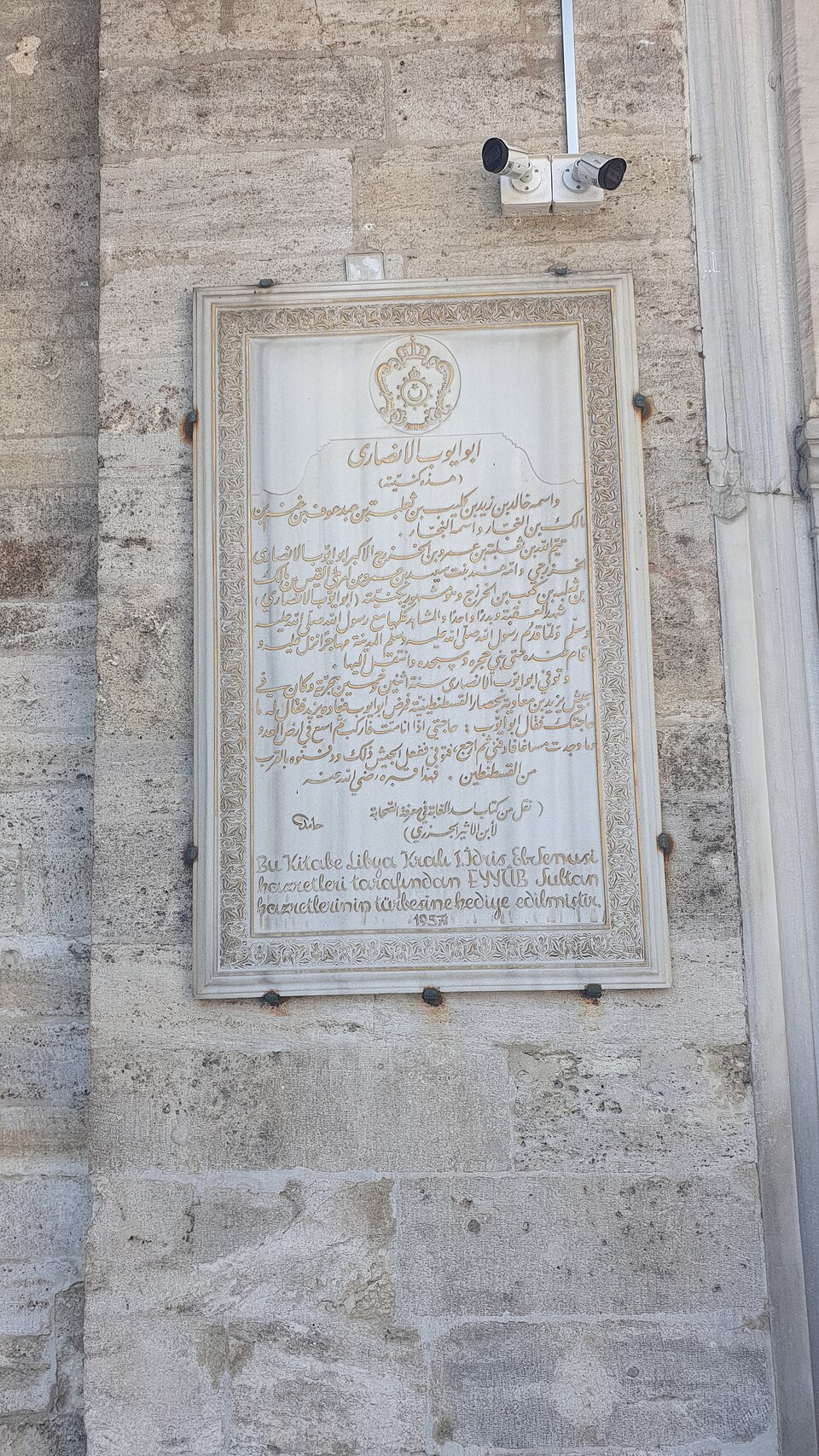
Eyup Sultan, Abu Ayyub al-Ansari, is remembered above all as the Companion who hosted the Prophet in his home in Medina. But his devotion to the Prophet did not stop at his own door; it reached the battlefields too. The sources relate that from Badr onwards Abu Ayyub took part in every campaign of the Prophet, never left his side in battle, and on some nights stood guard at his tent to protect him. This article tells the story of Abu Ayyub's campaigns and why he is remembered as "the guard of the Prophet".
What Is a Ghazwa?
In the sira sources, the campaigns the Prophet took part in himself are called ghazwa, while military units he sent out under an appointed commander without joining them are called sariyya. The greatest honour in Abu Ayyub's life is that he never stayed behind from any ghazwa of the Prophet.
Badr (624): Among the People of Badr
The Battle of Badr, in the second year after the Hijra, was the first great encounter between the Muslims and the polytheists of Mecca. The small Muslim army won a great victory with the help of Allah. Those who fought at Badr are called the "People of Badr" and hold a very high rank in Islamic history; the Prophet gave the glad tidings that Allah had forgiven them (al-Bukhari, Kitab al-Maghazi 9). Abu Ayyub was one of this distinguished company.
Uhud (625): The Battle in Which He Lost His Brother
Uhud was a hard trial for the Muslims. When the archers left their positions the course of the battle changed, and many Companions were martyred. One of them was Mus'ab ibn Umayr, who never let the banner fall. Mus'ab was the Companion whom the Prophet had declared the brother of Abu Ayyub after the Hijra. Abu Ayyub fought beside the Prophet at Uhud and lost his brother in faith in this battle.
The Trench (627): Service With a Spade
In the fifth year after the Hijra, the Meccan polytheists and their allies besieged Medina with a great army. The Muslims defended the city by digging a trench along its open side. The Prophet himself carried earth together with his Companions and prayed with them: "O Allah, there is no life but the life of the Hereafter, so forgive the Ansar and the Emigrants" (al-Bukhari, Kitab al-Maghazi 29). Abu Ayyub was among the Ansar who dug the trench.
Khaybar (628): The Guard at the Tent
Abu Ayyub's best-known memory of the campaigns took place on the return from Khaybar. After the conquest of Khaybar the Prophet had married Safiyya, daughter of Huyayy ibn Akhtab, one of Khaybar's leaders. Safiyya's father and relatives had been killed in the fighting, and Abu Ayyub feared that this might bring harm to the Prophet. That night he girded his sword and stood guard around the Prophet's tent until morning.
When the Prophet came out in the morning and found Abu Ayyub at the door, he asked what he was doing. When Abu Ayyub explained his worry, the Prophet prayed for him: "O Allah, protect Abu Ayyub as he spent the night protecting me." (Ibn Hisham, al-Sira)
In another hadith the Prophet describes the virtue of keeping watch in the way of Allah: "Two eyes will not be touched by the Fire: an eye that weeps out of fear of Allah, and an eye that spends the night keeping watch in the way of Allah." (al-Tirmidhi, Kitab Fada'il al-Jihad 12) Abu Ayyub kept that watch at the very door of the Prophet. The people of Istanbul attribute to the blessing of the Prophet's prayer that morning the preservation of his grave for eight centuries at the foot of the walls, and its eventual discovery.
The Conquest of Mecca (630): A Victory Without Bloodshed
In the eighth year after the Hijra the Prophet entered Mecca with a great army. The city that had once driven the Muslims from their homes was conquered almost without bloodshed, and the Prophet forgave his former enemies. Abu Ayyub, who had hosted the Prophet after he emigrated from Mecca eight years earlier, was now in the army entering Mecca with him.
Hunayn (630): The Return of the Ansar
At the start of the Battle of Hunayn, fought soon after the conquest of Mecca, the Muslim army was ambushed and scattered. The Prophet held his ground, saying, "I am the Prophet, that is no lie; I am the son of Abd al-Muttalib" (al-Bukhari, Kitab al-Jihad 52). He then called his Companions, especially the Ansar, back to him; the Ansar rushed to answer and the course of the battle changed. Abu Ayyub was among those Ansar who ran to the Prophet's call.
Tabuk (630): The Campaign of Hardship
The campaign of Tabuk, in the ninth year after the Hijra, took place in the summer heat on a long and difficult road, which is why it is known as "the army of hardship". Many hypocrites invented excuses to stay behind, but Abu Ayyub joined this campaign too.
After the Prophet: To His Last Breath
After the Prophet's death Abu Ayyub did not abandon this path. He served in the armies of the conquests under the Rightly Guided Caliphs and stood by Ali during his caliphate. The sources relate that he joined a campaign almost every year until the end of his life. The last stop of this journey was the campaign against Constantinople, which he joined when he was past eighty. He died there and, at his own request, was buried at the foot of the walls. We tell the story of this last journey in Why Did Abu Ayyub al-Ansari Come to Istanbul?
The Lesson of the Guard
Abu Ayyub's life of campaigns shows how love is lived. He was not content with hosting the Prophet in his home in Medina; he never left his side in battle and protected him while he slept. Those who visit Eyup Sultan's mausoleum today are, in truth, visiting the grave of a guard who once stood awake until dawn at the Prophet's tent.
For Abu Ayyub's full life read Who Was Eyup Sultan?, for more moments from his life 10 Lessons From the Life of Eyup Sultan, and on the Prophet's banners The Secret of the Banners.