What Was Eyup Sultan's Real Name? Khalid ibn Zayd and His Other Names
06 November 2026 - Eyüp Sultan Camii
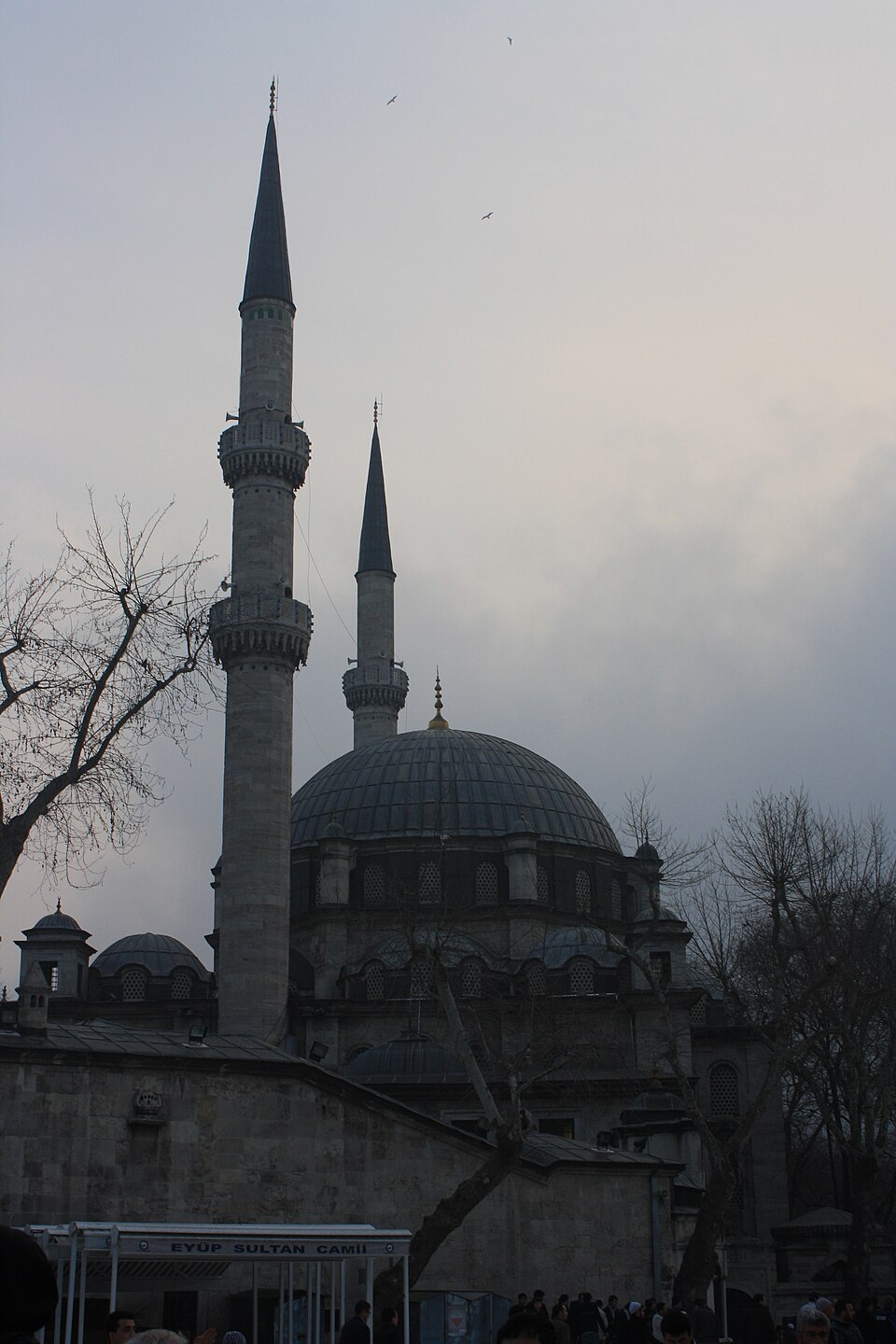
In Istanbul everyone knows him as Eyup Sultan. In the hadith books he appears as Abu Ayyub al-Ansari; in Turkish some write "Ebu Eyyub", others "Eba Eyyub". Yet none of these is his actual name. In this article we explain the real name, kunya, nisbas and titles of this great Companion who hosted the Prophet, together with what each of them means.
All His Names at a Glance
- Given name (ism): Khalid
- Lineage (nasab): Khalid ibn Zayd ibn Kulayb, that is, Khalid son of Zayd, grandson of Kulayb
- Kunya: Abu Ayyub, "father of Ayyub"
- Nisbas: al-Ansari, al-Najjari, al-Khazraji
- Titles: Mihmandar-i Nabi (the host of the Prophet), popularly also Alemdar (standard-bearer)
- Name in Istanbul: Eyup Sultan
- In Arabic: خالد بن زيد، أبو أيوب الأنصاري
- In Turkish spellings: Ebû Eyyûb el-Ensârî, Ebu Eyyub, Eba Eyyub, Eyüp Sultan
How Arabic Names Work
To understand why Eyup Sultan has so many names, it helps to know the Arab naming tradition. In classical Arabic naming, several different names of a person were used together:
- Ism: The given name at birth. For Eyup Sultan this is Khalid.
- Nasab: The chain of father and forefathers joined by "ibn" (son of): Khalid ibn Zayd ibn Kulayb.
- Kunya: A respectful name beginning with "Abu" (father of), or "Umm" (mother of) for women: Abu Ayyub.
- Nisba: A name ending in "-i" showing a person's tribe, city or community: al-Ansari.
- Laqab: A name given because of a quality or a memory.
Among the Arabs, addressing someone by their kunya was considered more respectful than calling them by name. That is why Khalid ibn Zayd was known above all as Abu Ayyub, both in his lifetime and in the hadith sources, where his name almost always appears as "Abu Ayyub al-Ansari".
His Real Name: Khalid ibn Zayd
Eyup Sultan's given name is Khalid, which in Arabic means "lasting, eternal". His father was Zayd ibn Kulayb. In the sira sources his full lineage extends as Khalid ibn Zayd ibn Kulayb ibn Tha'laba and reaches the Khazraj tribe of Medina.
The meaning of his name fits his life beautifully: Khalid, the one who lasts. Fourteen centuries after his death, the memory of this Companion, who gives his name to a district of a great city and whose grave thousands visit every day, has truly lasted.
His Kunya: Abu Ayyub, Aba Ayyub
Abu Ayyub means "father of Ayyub". In Arab tradition the kunya was usually taken from the name of one of a man's sons, often the eldest; it is reported that Ayyub was the name of one of his sons.
In Turkish several spellings of this kunya are found: Ebû Eyyûb, Ebu Eyyub, Eba Eyyub. Where does the difference between "Abu" and "Aba" come from? In Arabic this word for "father" changes form according to its role in the sentence: Abu as the subject, Aba as the object and when addressing someone, and Abi after a preposition or in a possessive phrase. In the greeting visitors offer at the tomb, "Assalamu alayka ya Aba Ayyub" (Peace be upon you, O Abu Ayyub), the kunya is in the form of address and so becomes "Aba". This is where the common Turkish spelling "Eba Eyyub" comes from. Both are correct.
A lovely detail: his wife is known by the feminine form of the same kunya, Umm Ayyub, "mother of Ayyub".
His Nisbas: al-Ansari, al-Najjari, al-Khazraji
- al-Ansari: His best-known nisba. "Ansar" means "helpers", the name given to the Muslims of Medina who welcomed those who emigrated from Mecca. It is a title of honour that also appears in the Quran (Surah at-Tawbah, 100).
- al-Najjari: Shows his clan, the Banu al-Najjar. They were the family of Salma, the mother of the Prophet's grandfather Abd al-Muttalib, and so were regarded as relatives of the Prophet.
- al-Khazraji: Shows that he belonged to the Khazraj, one of the two great tribes of Medina.
His Titles: Host of the Prophet and Standard-Bearer
Mihmandar-i Nabi (or Mihmandar-i Rasul) means "host of the Prophet". Because the Prophet stayed in his house for about seven months after migrating to Medina, this has been Eyup Sultan's most beloved title since Ottoman times. See our article Host of the Messenger: Eyup Sultan.
Alemdar means "standard-bearer". In popular tradition Eyup Sultan is also called "the Prophet's standard-bearer". The sources, however, contain no clear record that he carried the Prophet's banner in a particular battle; the title should be understood as an expression of reverence for his loyalty in every campaign. We discuss this in The Secret of the Banners.
Why "Eyup Sultan"?
The people of Istanbul call him Eyup, a shortened Turkish form of his kunya, and out of respect, Sultan. This "Sultan" is not a title of rule. In Anatolian and Ottoman tradition, deep reverence for great saints and spiritual leaders was expressed by calling them "sultan"; Emir Sultan in Bursa and Karacaahmet Sultan in Istanbul are examples. Eyup Sultan is one of the greatest of those known by this title: a sultan of hearts.
In Turkish the Arabic name Ayyub (Eyyûb) gradually became easier to pronounce as Eyüp, which is why both "Eyüp Sultan" and "Eyyûb Sultan" are found.
The Eyup Neighbourhood and Eyupsultan District
The neighbourhood that grew up around the mausoleum and mosque built by Sultan Mehmed the Conqueror in 1458 took its name directly from this Companion and was known for centuries as Eyüp. In 2017 the official name of the district was changed to Eyüpsultan. Today a district of Istanbul bears both the kunya of a Companion and the reverence felt for him.
A common confusion is worth correcting: the name of Eyup does not come from the Prophet Ayyub (Job), known for his patience, but from the Companion Abu Ayyub al-Ansari, who carries that name in his kunya.
Frequently Asked Questions
What was Eyup Sultan's real name?
His given name was Khalid ibn Zayd. Abu Ayyub is his kunya, and al-Ansari his nisba.
Is it "Abu Ayyub" or "Aba Ayyub"?
Both are correct. The Arabic word changes with its place in the sentence: "Abu Ayyub" when he is mentioned, "Aba Ayyub" when he is addressed.
Was Eyup Sultan a sultan?
No. Here "Sultan" is not a title of rule but an expression of the people's reverence for great spiritual figures.
Is the Eyup district named after the Prophet Ayyub (Job)?
No. It takes its name from the Companion Abu Ayyub al-Ansari.
For Eyup Sultan's full life read Who Was Eyup Sultan?, and for the story of his coming to Istanbul Why Did Abu Ayyub al-Ansari Come to Istanbul?